Smooth Skin Guide: Fix Uneven Texture and Restore Your Glow
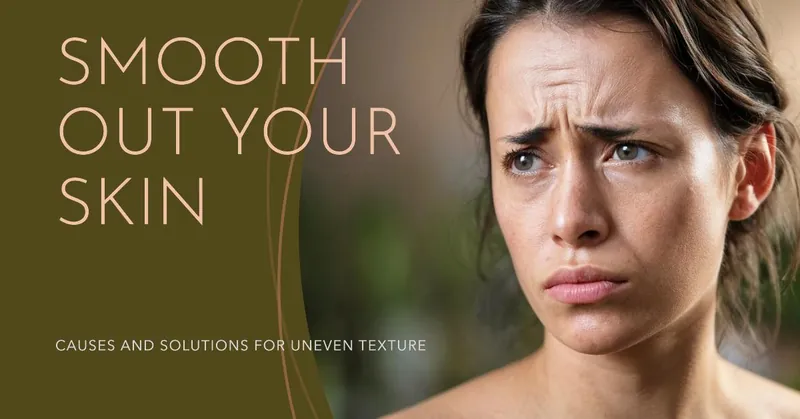
Have you ever looked in the mirror and felt like your skin lost its sparkle? Maybe it feels a bit rough when you wash your face. Or perhaps you see small bumps that just won’t go away. This is called uneven skin texture, and it is one of the most common things people ask me about in my clinic. After 15 years as an aesthetician, I can tell you that texture is about more than just how you look. It is a vital sign of your skin’s health.
When your skin is smooth, it acts like a polished mirror. It reflects light perfectly. This is what creates that famous “glow” we all want. But when the texture is bumpy or dry, the light scatters in different directions. This makes your face look tired, dull, and older than it really is.
This guide is your science-backed roadmap to fix those issues. We will move from rough, uneven skin to a radiant complexion. To fix the problem, we must first look deep under the surface to see where it begins.
The Biological Root Causes of Texture Issues
- The Biological Root Causes of Texture Issues
- The Foundation: A Professional-Grade Home Skincare Routine
- Strategic Exfoliation: Physical vs. Chemical Methods
- Advanced Solutions: Professional Clinical Treatments
- The Holistic Layer: Lifestyle Factors for Radiant Skin
- Navigating Success: When to Consult a Dermatologist
- Conclusion: Your Roadmap to Lasting Smoothness
- Frequently Asked Questions: Expert Clarifications
- Meet Donna: Founder & Lead Curator

To fix your skin, you must be a bit of a detective. You need to know the “why” before you can find the right “how.” Think of your skin like a garden. If the plants are wilting, you need to know if they need more water or less sun. If you just guess, you might make it worse. Understanding the root cause of your skin changes is the first step to a successful treatment plan.
Three main culprits cause most texture problems. These are dead skin cell buildup, dryness, and clogged pores.
- Dead Skin Cell Buildup: Your skin is always making new cells. The old ones are supposed to fall off in a natural shedding process called desquamation. As we age, this process slows down. The old cells pile up on the surface like a stack of old papers. This makes the skin feel coarse.
- Dryness: Your skin has a top layer called the stratum corneum. It needs moisture to stay flat. When it is dry, the cells curl up at the edges. This creates a flaky, rough surface that catches the light instead of reflecting it.
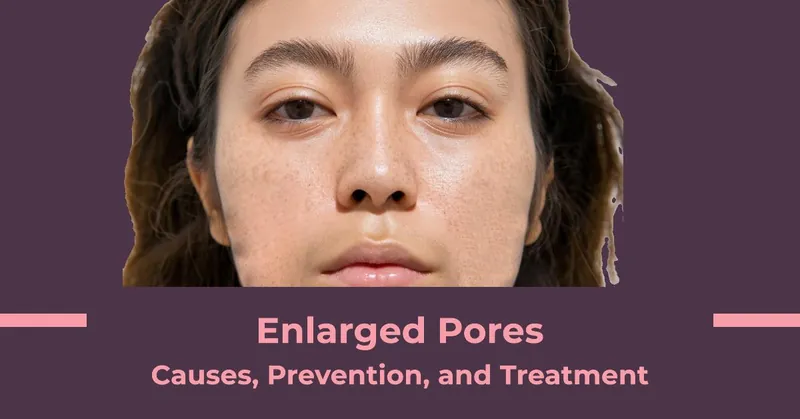
- Clogged Pores: Your skin produces a natural oil called sebum. If that oil gets trapped with dirt and old cells, it creates bumps. You might see blackheads or whiteheads. These make the skin surface look like a mountain range instead of a flat plain.
There are secondary factors at play, too. Sun damage is a massive issue. Think of collagen and elastin as the “support beams” of your skin. UV rays act like a wrecking ball that breaks these beams. When the support is gone, the skin loses its “bounce.” It becomes thin and wrinkled. Aging also plays a part because your body stops making as much “glue” (collagen) to keep things tight.
Some people also have Keratosis Pilaris. These are tiny, rough bumps that feel like sandpaper. They usually show up on the upper arms or cheeks. Lastly, acne scarring can cause permanent changes. When a deep pimple heals, it can leave a “crater” or a raised mark. These marks change how smooth the skin feels forever unless they are treated. The good news is that most of these biological issues can be managed with a steady, disciplined home routine.
The Foundation: A Professional-Grade Home Skincare Routine
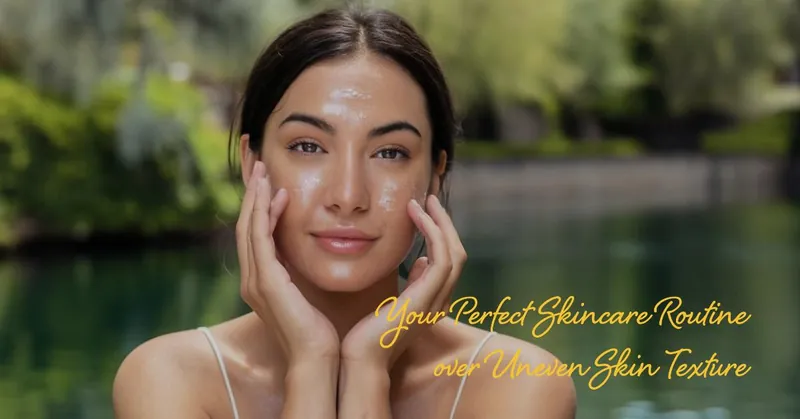
If you want smooth skin, you must be consistent. In my 15 years of experience, I have seen that patience is the most important “ingredient.” You cannot use a product once and expect a miracle. Your skin takes about 30 days to renew itself. You need to give your products time to work. A daily routine is the strategic foundation for all your results.
The first phase is Gentle Cleansing. You should wash your face twice a day. It is critical to use a mild cleanser. You must avoid harsh soaps. Your skin has a natural protective shield called the “acid mantle.” This shield keeps “bad” bacteria out and moisture in. Harsh soaps strip this shield away. If the shield breaks, your skin gets red, dry, and bumpy.
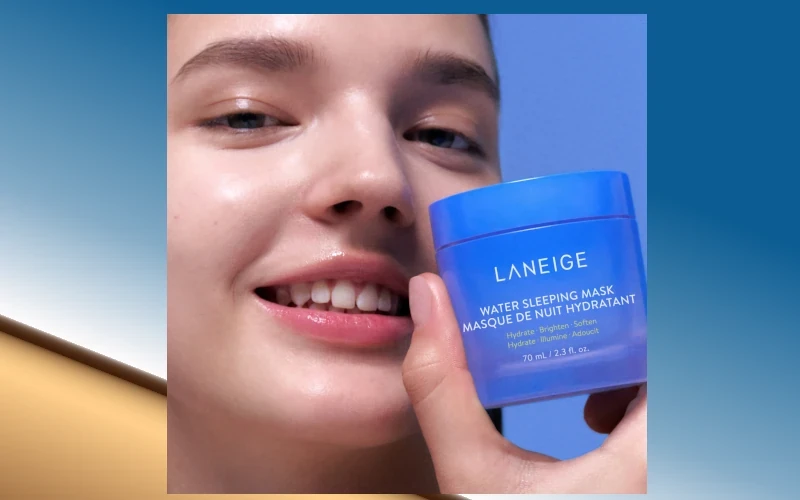
The second phase is Hydration. This is about “plumping” the skin from the inside. Look for ingredients like Hyaluronic Acid and Ceramides. Hyaluronic Acid is like a tiny sponge. It can hold 1,000 times its weight in water! Expert Tip: Always apply Hyaluronic Acid to damp skin. If your skin is bone-dry, the acid might actually pull moisture out of your deeper skin layers to hydrate the surface. Ceramides are the “mortar” between your skin-cell “bricks.” They hold everything together so moisture can’t escape.
Finally, you must use Sun Protection (SPF 30+). Think of sunscreen as your daily shield. As an aesthetician, I often see more texture damage on the left side of a person’s face. This is from the sun hitting them while they drive! It is proof that UV rays penetrate glass and destroy your skin’s smoothness. If you don’t use SPF, the sun will keep destroying your collagen. Now that the foundation is set, let’s look at the “accelerator” for smooth skin: exfoliation.
Strategic Exfoliation: Physical vs. Chemical Methods
Exfoliation is like the “fast-forward” button for your skin. It helps the natural shedding process move faster. It clears away the old, rough cells so the fresh, smooth skin can shine through. There are two main ways to do this.
| Exfoliation Type | How it Works | Best For | Frequency |
| Physical | Uses grains, scrubs, or brushes to manually rub away dead cells. | Best for quick fixes on very rough patches like the chin or nose. | 1 time per week. |
| Chemical | Uses acids (AHAs/BHAs) to dissolve the “glue” holding dead cells together. | Best for deep pore cleaning, acne, and long-term glow. | 2–3 times per week. |
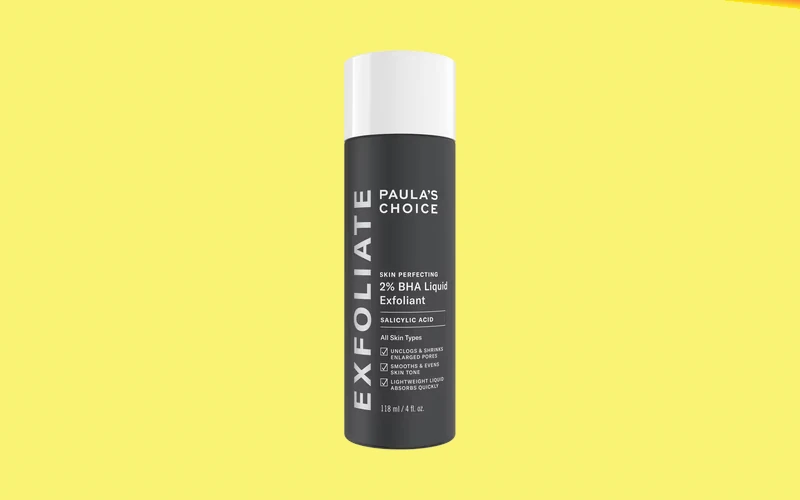
Chemical Exfoliators are often the best choice for texture. AHAs (like Lactic Acid) are great for sensitive skin because they hydrate while they exfoliate. BHAs (like Salicylic Acid) are better for oily skin because they can go deep inside the pore to dissolve clogs.
Before you try any new acid, you must do a Patch Test. Put a small amount on your neck or behind your ear. Wait 24 hours to see if you get red or itchy. You must also be careful not to over-exfoliate. If you scrub too much, you will damage your skin barrier. Instead of being smooth, your skin will look “plastic-y,” shiny, and feel very sensitive. While home care is the start, deep-seated issues may require a professional touch.
Advanced Solutions: Professional Clinical Treatments
Sometimes, home products reach a limit. If you have deep acne scars or very stubborn bumps, clinical treatments are a strategic choice. These are done by experts like me in a medical setting. They use higher concentrations of ingredients than you can buy at a store.
- Chemical Peels: We use a high-strength acid to remove the entire top layer of dead skin.
- Sensation: It feels like a very warm, tingling heat on the skin.
- Expected Outcome: Once the skin peels and heals, the new skin is incredibly soft and even-toned.
- Who should avoid: Do not get a peel if you have an active cold sore or a sunburn.
- Microdermabrasion: This is a mechanical “sanding” of the skin.
- Sensation: It feels like a cat’s rough tongue licking your skin.
- Expected Outcome: It triggers the skin to make more collagen. It is great for removing surface roughness and “polishing” the face.
- Who should avoid: Avoid this if you have very sensitive skin or active, inflamed acne.
- Laser Therapy: This uses targeted energy to find scars and wrinkles deep in the skin.
- Sensation: It feels like a small rubber band snapping against your skin.
- Expected Outcome: It is the gold standard for fixing deep acne scars and sun damage.
- Who should avoid: Those with certain skin conditions like lupus or those taking light-sensitive medications.
- Microneedling: We use a tool with tiny needles to make “micro-injuries.”
- Sensation: It feels like a vibrating, prickly pressure.
- Expected Outcome: Your body “panics” and sends a flood of collagen and elastin to heal the area. This fills in pits and smooths out bumps.
- Who should avoid: Do not do this if you are prone to keloid scarring or have active skin infections.
These treatments fix the surface, but we must also look at the “internal” side of skincare.
The Holistic Layer: Lifestyle Factors for Radiant Skin
Topical products are only half the battle. Your body needs “building blocks” to make new, healthy skin. These blocks come from your daily life. If you are healthy on the inside, your skin will show it on the outside.
- Diet & Hydration: Your skin loves antioxidants found in colorful fruits and vegetables. These protect your cells from damage. Water is also key. When you are hydrated, your skin stays “plump.” When you are dehydrated, your skin looks like a shriveled raisin—every bump and wrinkle shows up more.
- Sleep & Stress: When you sleep, your body goes into “repair mode.” It fixes the damage from the sun and pollution. Stress is a major texture killer. When you are stressed, your body makes a hormone called cortisol. Cortisol tells your skin to produce more oil. This leads to more clogged pores and more bumps.
- Smoking Cessation: Smoking is a disaster for skin texture. It restricts your blood vessels. This starves your skin of oxygen and nutrients. It also kills your collagen. This is why smokers often have “leathery” skin texture. If you want a glow, you have to put out the cigarette.
Sometimes, even with a perfect lifestyle, you need a doctor’s oversight.
Navigating Success: When to Consult a Dermatologist
Skincare is part of your health. Sometimes, a change in texture is a sign of a medical problem. This is what we call a “YMYL” (Your Money or Your Life) concern. Your health is the most important thing. A dermatologist is a skin doctor who can give you a professional diagnosis that a beauty blog cannot provide.
I am Donna, the founder of Aesthetic Thrive. As a curator of beauty and wellness, I believe in results that are backed by experts. If home care isn’t working, a doctor is your best partner.
Red Flags (When to see a doctor):
- Persistent Acne: Breakouts that lead to deep, painful cysts and scarring.
- Stubborn Bumps: Keratosis Pilaris that does not respond to urea or lactic acid creams.
- Severe Peeling: Skin that is always red, painful, or constantly shedding.
- Unusual Marks: New spots that change shape or color.
A dermatologist can provide Personalized Treatment. For example, they might prescribe Retinoids. These are powerful Vitamin A creams. Expert Tip: Start with a very low concentration, like 0.25%. This helps you avoid “retinization,” which is the period of redness and peeling that happens when you first start.
Conclusion: Your Roadmap to Lasting Smoothness
Achieving a smooth, even complexion is a journey, not a sprint. It requires a blend of three things: understanding what causes your texture issues, keeping a consistent daily routine, and getting professional support when things get tough. There is no magic pill that works overnight. You must be dedicated to the process.
If you are struggling with uneven skin texture, remember that you are not alone. Almost everyone deals with this at some point. The key is to be proactive. Protect your skin from the sun every single day. Keep your skin barrier strong with hydration. And most importantly, be gentle with yourself. With time, the right ingredients, and a little bit of patience, you can restore your skin’s natural, radiant glow.
Frequently Asked Questions: Expert Clarifications
- What are the ways to treat your Uneven Skin Texture?
https://www.dermaessentia.com/blogs/knowledge/uneven-skin-texture - 14 Treatments for Uneven Skin Texture That Dermatologists Swear By
https://www.byrdie.com/how-to-fix-uneven-skin-texture-4686864 - 8 Ways to Get Rid of Uneven Skin Texture
https://www.instyle.com/uneven-skin-texture-7966691 - An Expert-Backed Guide to Improve Uneven Skin Texture
https://www.wikihow.com/Improve-Skin-Texture

Meet Donna: Founder & Lead Curator
Hi, I’m Donna, the voice and vision behind Aesthetic Thrive.
As a professional digital content creator and wellness strategist, I founded this platform to simplify the journey toward a more beautiful, balanced life. My background is rooted in a deep passion for fashion, intentional living, and holistic health. For years, I have dedicated my career to researching how the environments we build both within our bodies and in our homes directly affect our daily confidence and long-term well-being. Read More!