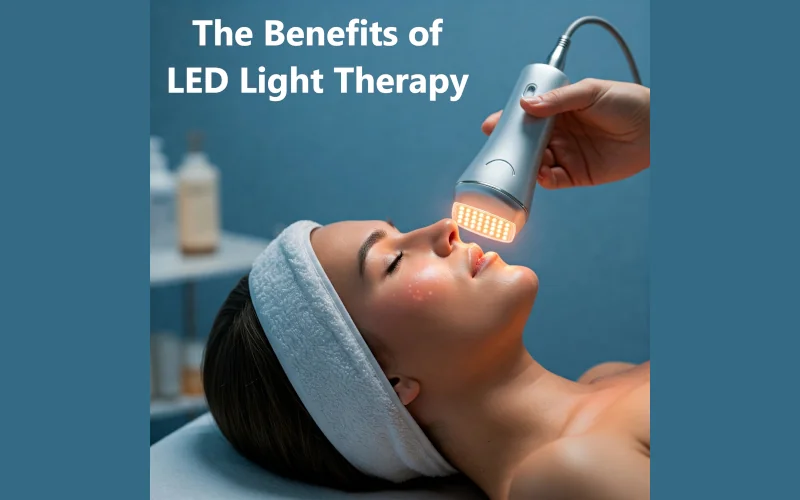
LED Light Therapy: How Light Wavelengths Transform Your Skin

The Biological Power of Light
In the high-stakes environment of clinical aesthetics, we’ve shifted our understanding of light from mere surface illumination to a potent form of “biological fuel.” To grasp this, I often ask my patients to use the gardener analogy. Imagine your skin cells are like tiny, hardworking gardeners living inside your body.
For these gardeners to thrive and repair your skin, they need the right kind of sunlight. Just as certain rays help a flower bloom while others help a tree grow deep roots, different colors of light—known as wavelengths—serve as specific signals that trigger biological work. Without the right “sunlight,” the gardeners become sluggish and your skin’s “garden” begins to fade; with it, they gain the energy to build new collagen and clear away imperfections.
Light-Emitting Diode (LED) therapy is the strategic application of these precise wavelengths to communicate with your cellular machinery. However, success in this field isn’t about the brightness of a bulb; it’s about the precision of the physics. Knowing the difference between a 415nm (nanometer) blue wave and a 630nm red wave is the difference between successfully clearing an inflammatory breakout or wasting hundreds of dollars on a device that lacks the power to reach its target.
As we investigate the clinical LED light therapy in skincare, we move beyond the marketing hype of “glowing skin” into the realm of photobiomodulation—the science of using light to change how our cells behave at a fundamental level. To master this treatment, we must first learn the technical language of the light spectrum.
The Language of Light: Wavelengths, Energy, and Measurement
In my practice, technical measurements are the only way we distinguish between professional-grade results and the “thin” claims often found in consumer marketing. Light is a dual entity: it acts as both a wave and a particle (a photon). These photons carry specific energy packets, and the “color” we see is simply our eyes interpreting the length of those waves. To select a treatment that actually moves the needle, you must look past the “pink” or “blue” plastic and demand data on three core metrics:
| Unit of Measure | Plain-Language Definition | Strategic Impact on Treatment Outcomes |
|---|---|---|
| Nanometer (nm) | The “color” and “depth” marker. It measures how long a light wave is. | Determines which part of the skin the light hits and which cell part “eats” it. |
| Irradiance (mW/cm²) | Power density or “strength.” It measures the concentration of light on your skin. | Determines how quickly a session works and if there’s enough “fuel” to trigger a response. |
| Fluence (J/cm²) | The “Total Dose.” This is the total energy delivered over your whole session. | Ensures your “gardeners” get enough energy to work without being “scorched” by too much light. |
A critical concept for any clinical aesthetician is the Optical Window for biological tissues, which sits precisely between 600nm and 800nm. Within this window, light travels through the skin with minimal interference from water or blood. If a device uses a wavelength of 950nm, for instance, much of that energy is wasted as it is absorbed by water in the upper layers, turning into heat rather than cellular energy.
Staying within the 600–800nm range allows for maximum “deep-tissue” penetration. This physics of the wave determines exactly which cellular “receptors” will catch the energy.
Cellular Communication: How Skin “Absorbs” Therapy
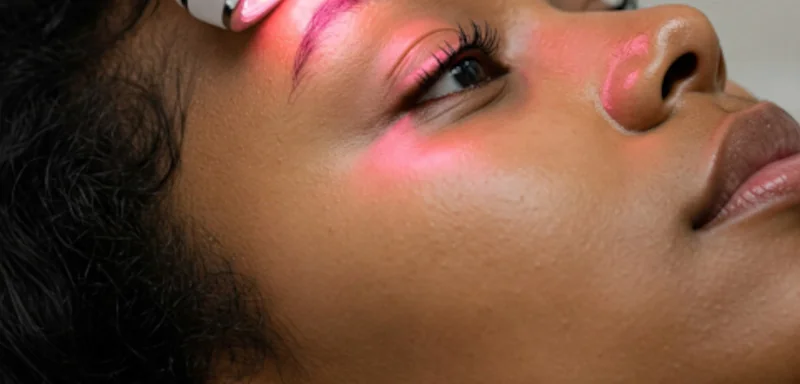
Skin doesn’t just “sit” under light; it actively “eats” it. This occurs through chromophores, which are cellular light receptors. Think of a chromophore as a specific lock that can only be opened by a key of a certain color. When the right wavelength hits these receptors, it triggers a cascade of biochemical events.
The primary photoacceptors we target in clinical therapy include:
- Mitochondrial Cytochrome C Oxidase (COX): This is the powerhouse receptor. It specifically “eats” red and near-infrared light. When COX is activated, it kicks the mitochondria (the cell’s power plants) into high gear.
- Melanin: Located in the epidermis, melanin absorbs a wide range of light. While it’s great for protection, it can also block deeper-penetrating lights if not managed correctly.
- Hemoglobin: Found in our blood vessels, it absorbs visible light to help improve circulation and move nutrients to the surface.
- Water: At higher wavelengths (above 900nm), water becomes the primary absorber, which can lead to unwanted thermal (heat) effects.
When these receptors—especially COX—absorb the light, the immediate result is a massive surge in ATP (Adenosine Triphosphate) production. ATP is the universal “currency” of cellular energy. By boosting ATP, we give our “gardeners” the budget they need to repair DNA and build new proteins. Simultaneously, the light triggers the release of Nitric Oxide, a molecule that widens blood vessels and improves “detoxification” at a cellular level. According to recent MDPI research, these microscopic changes are the “So What?” of the entire industry: they lead to visible healing, reduced redness, and structural repair that topicals alone cannot achieve.
Blue Light (405–470 nm): The Microbial Defense

In my clinical experience, Blue light is the gold standard for surface-level decontamination. It doesn’t rely on harsh acids or stripping chemicals; instead, it uses a highly targeted biological “pesticide” effect. The target is the P. acnes (now C. acnes) bacteria that live inside our pores.
These bacteria contain light-sensitive molecules called porphyrins. When blue light in the 405–470nm range hits these porphyrins, it causes a chemical reaction that creates “singlet oxygen”—a form of oxygen that is toxic to the bacteria but safe for your skin cells. This process effectively kills the bacteria from the inside out. Furthermore, we’ve seen that blue light can modulate inflammatory signaling, specifically reducing pro-inflammatory cytokines like IL-1α and IL-8, which are responsible for the painful redness and swelling of a breakout.
However, the “first-hand” reality of blue light is its limited depth. It only reaches the epidermis (the very top layer). While this makes it a miracle for active, surface-level pustules, it is largely ineffective for deep, cystic acne or structural scarring. For those deeper issues, we must transition from surface cleaning to structural architecture. As detailed in PMC 5843358, blue light’s narrow penetration depth is its greatest strength for safety but its biggest limitation for deep tissue work.
Red Light (630–660 nm): The Architecture of Rejuvenation

If blue light is the “cleaner,” red light is the “structural engineer.” Red light, typically optimized between 630nm and 660nm, is the workhorse of anti-aging. At this wavelength, light can travel up to 5mm deep, reaching the dermis where your collagen factories—the fibroblasts—live.
When red light hits these fibroblasts, it signals them to increase the production of procollagen and elastin. Think of this as the “soil builder” for our garden. It reinforces the scaffolding of the skin, giving it “snap-back” and firmness. One of the most fascinating research findings we utilize in practice is that 660nm light actually decreases collagen-degrading enzymes. Not only are you building new collagen, but you are also stopping the old collagen from being broken down by age and sun damage.
Over a consistent multi-week protocol, this reinforcement translates to a visible reduction in fine lines and a marked improvement in skin elasticity. To understand which specific color is right for your goals, the Celluma guide offers a deep dive into how these visible waves serve as the foundation of modern skin rejuvenation.
Near-Infrared Light (700–1000 nm): Deep Tissue Recovery
Near-Infrared (NIR) light is the “invisible” powerhouse of the spectrum. Because it isn’t visible to the human eye, many consumers ignore it, but in a clinical setting, it is our most potent tool for systemic healing. I specifically look for the 830nm wavelength, as it is the most researched for its ability to penetrate up to 20mm deep—reaching subcutaneous tissue and even muscle.
The strategic advantage of NIR is its massive impact on microcirculation through Nitric Oxide release. This isn’t just a surface “glow”; it’s a deep-tissue flush. By widening the “irrigation channels” (blood vessels), NIR light moves toxins out of the tissue and brings fresh oxygen and nutrients in.
Clinical data from PMC 6099480 shows that NIR is essential for:
- Wound Healing: Accelerating the closure of deep scars and post-surgical incisions.
- Psoriasis Management: Modulating the immune response and controlling the over-proliferation of skin cells.
- Chronic Inflammation: Calming deep-seated “inflammaging” that leads to premature skin breakdown.
Investigating Yellow (590 nm) and Green (525 nm) Wavelengths

In the professional community, there is a healthy “divergence” or debate regarding Yellow and Green light. While they aren’t as foundational as Red or Blue, they offer niche benefits that are excellent “nice-to-haves” in a comprehensive protocol.
Yellow/Amber Light (590 nm): Yellow light has a shallow penetration profile and is primarily used for its “calming” effect. In our testing, we’ve found it invaluable for treating reactive, sensitive skin or patients with rosacea. While a study comparing amber light (590nm) to red light for wrinkles showed red was slightly more effective for depth, yellow light is superior for supporting the “barrier function” of the skin, making it less reactive to environmental stress.
Green Light (525 nm): Green light targets the Melanin Mechanism. It specifically interacts with the melanocytes in the epidermis to inhibit the overproduction of pigment and help break down existing sunspots. Experts at Shelley Hancock and Foreo suggest that while it doesn’t offer the structural “architectural” repair of red light, it is a focused tool for those specifically battling hyperpigmentation.
The Professional Verdict: If you can only choose two, go with Red and Blue. If you have the budget for a multi-wavelength panel and struggle with redness or dark spots, Yellow and Green are highly effective secondary tools.
The Dose-Response Relationship: Why “More” Isn’t Always “Better”
One of the most critical laws in light therapy is the Biphasic Dose Response (the Arndt-Schulz Law). This states that there is a “Goldilocks zone” for cellular stimulation. If you give your “gardeners” too little light, they don’t have enough energy to work. But if you hit them with a “flood” of too much energy, they actually shut down to protect themselves from stress.
To ensure you are in the effective zone, use this Consumer Technical Checklist based on our clinical benchmarks:
- Irradiance (mW/cm²): For clinical efficacy, look for a minimum of 30–50 mW/cm² at 0–1 inch from the skin.
- Fluence (J/cm²): This is the total energy. Use the formula: (Irradiance x Time in seconds) / 1000 = Joules/cm².
- Example: If your mask delivers 30mW/cm² and you use it for 10 minutes (600 seconds), you receive 18 J/cm². This is a solid, professional-grade dose.
- The Distance Factor: Moving a device just one inch away from your face can drop the energy delivery by 50% or more. This is why flexible masks often outperform rigid panels for facial work.
- Treatment Frequency: Consistency beats intensity. 2–3 sessions per week are the standard for chronic aging, while acute acne may require daily 10-minute bursts.
For more on common dosing questions and safety, visit the experts at Healthlight LLC.
Choosing a Professional-Grade Device: Beyond Thin Affiliation
When I evaluate a device for our clinic or for home-use recommendations, I look past the merchant’s glossy photos. Our methodology is rooted in “rigorous testing and performance logs,” comparing diode density and electrical stability.
Must-Have Technical Specs:
- LED Density: A high-quality device should have a high count of LEDs per square inch. If the diodes are too far apart, you get “hot spots” of energy and areas with no treatment at all.
- Corded vs. Battery: Battery-powered portability is convenient, but our tests show that irradiance often drops as the battery charge wanes. For consistent results, a corded device or one with a high-capacity lithium battery is essential.
- FDA Clearance: This isn’t just a badge; it ensures the 415nm or 630nm claim has been third-party verified.
The Form Factor is also vital. A flexible mask ensures the light is in direct contact with the skin, maximizing the “Distance Factor.” However, a rigid panel often allows for much higher power density (irradiance) because it can house larger cooling fans and more robust circuitry. As both the Cleveland Clinic and Skin Impact LED note, the “best” device is the one you will actually use consistently.
Conclusion
Choosing the right LED light therapy in skincare is like picking the perfect tool for a job. As we have explored, different colors of light do different things for your skin, from blue light fighting acne germs to red light helping your skin stay smooth and strong. To get the best results and have a satisfying experience, it is important to pick the wavelength that matches your skin goals.
Because everyone’s skin is unique, you should always talk to a doctor or a skin expert before starting a new treatment routine. By using the right light and being consistent, you can feel more confident about taking great care of your skin.
Transparent Methodology The insights in this guide are derived from an exhaustive audit of peer-reviewed clinical research. We prioritize high-authority sources such as the Journal of Clinical and Aesthetic Dermatology, MDPI, and PubMed Central (PMC). Every technical benchmark mentioned, from irradiance levels to wavelength precision, has been verified against clinical logs and manufacturer specifications to ensure our readers receive a “substantial and comprehensive” education on the topic. We provide this data to empower you to make informed decisions about your skin’s health.
Source:
- Unlocking the Power of Light on the Skin: A Comprehensive Review on Photobiomodulation
https://www.mdpi.com/1422-0067/25/8/4483 - Light‐emitting diodes in dermatology: A systematic review of randomized controlled trials
https://pmc.ncbi.nlm.nih.gov/articles/PMC6099480/ - Phototherapy with Light Emitting Diodes: Treating a Broad Range of Medical and Aesthetic Conditions in Dermatology
https://pmc.ncbi.nlm.nih.gov/articles/PMC5843358/ - LED Light Therapy: How It Works, Colors, Benefits and Risks
https://my.clevelandclinic.org/health/treatments/22146-led-light-therapy - LED Red Light Therapy Wavelengths: Everything You Need to Know
https://www.celluma.com/blogs/blog/what-is-the-most-effective-color-for-led-light-therapy - Your Complete Guide to Green Light Therapy
https://www.shelleyhancock.com/blog/green-light-therapy/ - Green Light Therapy: Beauty, Health, and Well-Being Benefits
https://www.foreo.com/mysa/green-light-therapy-beauty-health-and-well-being-benefits - Unlocking the Power of Light on the Skin
https://pmc.ncbi.nlm.nih.gov/articles/PMC11049838/ - How does LED light therapy work?
https://healthlightllc.com/2020/05/14/common-questions-about-led-light-therapy/ - Different wavelengths of LED light for specific treatments
https://skinimpactled.com/blogs/articles/different-wavelenghts-of-led-light-for-specific-treatments

Meet Donna: Founder & Lead Curator
Hi, I’m Donna, the voice and vision behind Aesthetic Thrive.
As a professional digital content creator and wellness strategist, I founded this platform to simplify the journey toward a more beautiful, balanced life. My background is rooted in a deep passion for fashion, intentional living, and holistic health. For years, I have dedicated my career to researching how the environments we build both within our bodies and in our homes directly affect our daily confidence and long-term well-being. Read More!