How LED Light Penetrates Skin: The Cellular Response Explained
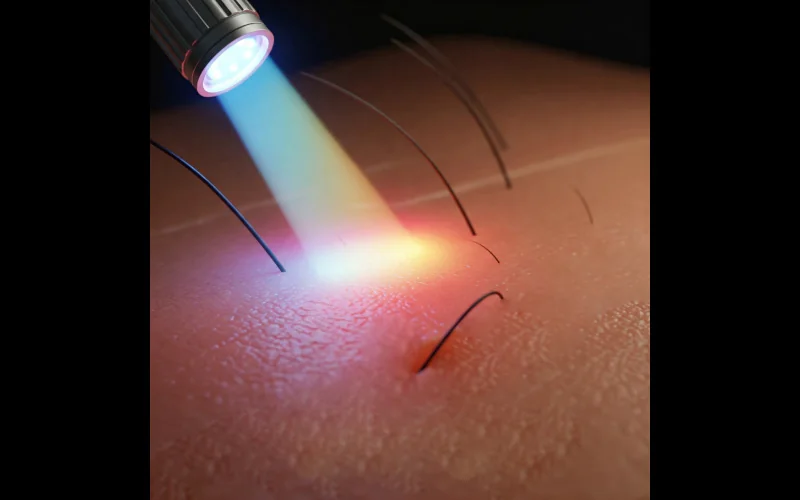
Have you ever wondered how light can help your skin look its best? Imagine your skin is like a wonderful, layered garden. When you use a special light device, tiny particles of light start a microscopic adventure to help your cells. This journey is what scientists call LED Light Penetration in Skin.
This guide was created by studying medical reports and clinical test data to provide a substantial and complete description of how these treatments work. Instead of just giving a simple summary, we explored the “how” and “why” behind the light to make sure you have a satisfying experience. By learning how light talks to your cells, you will be able to make better choices for your own skin and reach your beauty goals.
Key Concept: LED Light Penetration is the physical process where light particles (photons) travel through the various layers of the skin. Like a key fitting into a lock, different colors and energy levels of light reach different depths to “switch on” specific healing processes within your cells.
Before we can follow these light messengers on their journey, we must first understand the complicated landscape they have to travel through: the skin itself.
- The Architecture of Your Skin: A Three-Story House
- The Physics of Light: Bouncing, Scattering, and Soaking Up
- The "Optical Window": Why Red Light Goes Deeper
- Cellular Antennas: Meeting the Chromophores
- The Mitochondrial Response: Turning on the Power
- The Tissue Communication Network: Fibroblasts and Beyond
- Genetic Expression: Changing the Cell's Instructions
- The Specialized Workforce: How Different Cells React
- From Cells to Results: The Timeline of Change
- Maximizing Your Results: The Golden Rules of Treatment
- Final Takeaway: Harnessing the Power of Light
- Meet Donna: Founder & Lead Curator
The Architecture of Your Skin: A Three-Story House

To understand how light reaches its target, we have to look at the house it is entering. Your skin is not a thin, flat sheet; it is a complex piece of biological architecture. When we examine the cellular structure, it is best to think of your skin as a cozy three-story house, where each floor has a very different and important job.
- The Epidermis (The Roof): This is the top floor—the part you see in the mirror every day. Just like a roof, its primary job is protection. It is a tough barrier that keeps germs, dirt, and rain out while keeping your body’s moisture in.
- The Dermis (The Living Room and Workplace): This is the middle floor, and it is the thickest part of the house. This is where the real “work” of the skin happens. It is filled with bouncy, stretchy fibers called collagen and elastin, which act like the springs in a mattress to keep your skin firm and youthful. This floor also houses the “pipes” (blood vessels) and the “construction crew” (worker cells called fibroblasts).
- The Hypodermis (The Basement and Storage): This is the bottom floor, mostly made of fatty tissue. It acts as a cushion for your organs and helps keep your body warm, much like insulation in a basement.
As a researcher, I must note that this house changes its design depending on where it is located on your body. For instance, the skin on your eyelids is incredibly thin, like a house made of tissue paper, while the skin on the soles of your feet is thick and rugged. This variation in thickness dictates how far our light messengers have to travel. If the “walls” are too thick, the light might lose its energy before it reaches the “workplace” in the dermis.
The Physics of Light: Bouncing, Scattering, and Soaking Up

When those “tiny balls of light” (photons) hit the roof of your skin house, they don’t all just walk through the front door. Because of the laws of physics, three distinct interactions occur when light meets human tissue:
- Reflection (Bouncing): Imagine throwing a rubber ball against a mirror. Some photons hit the surface of your skin and bounce right back off. If your skin is very smooth or has oily products on it, more light might reflect away instead of going inside to do its work.
- Scattering (Spreading Out): As the light enters the skin, it bumps into cells, proteins, and water. This causes the light to spread out in different directions, much like sunlight trying to push through a frosted window. Scattering is the reason light has a hard time staying in a straight line as it goes deeper.
- Absorption (Soaking Up): This is the most critical part of the journey! Some structures in your skin act like a sponge, soaking up the light messengers. These biological sponges are called chromophores.
Specific parts of your skin are “hungry” for different colors of light. For example:
- Melanin: This is the pigment that gives your skin its color. It is excellent at soaking up UV and blue light to protect you.
- Hemoglobin: This is the red part of your blood. It is very good at catching blue and green light.
- Water: The moisture inside your cells can also soak up certain types of light energy, turning it into heat.
Because different colors are “caught” by different sponges, they can only go so deep before they are all soaked up and used.
The “Optical Window”: Why Red Light Goes Deeper
In the world of biology, there is a strategic secret known as the “optical window.” While most light gets caught by the “sponges” of water or blood very quickly, there is a special range of light—Red and Near-Infrared—that can slide past these obstacles without getting stuck.
Think of Blue light as “surface ripples on a pond.” It has a short wavelength and moves very fast, but it gets caught by the “roof” (the epidermis) almost immediately. This makes it perfect for surface issues like blemishes because it targets bacteria right where they live. Red light, however, is like “deep-sea waves.” It has a longer wavelength and the endurance to travel past the roof and deep into the “living room” (the dermis) where the collagen is produced.
| Light Type | Wavelength (nm) | Depth of Penetration | Primary Target Layer |
| Blue Light | 400–470 nm | Shallow | Epidermis (Surface) |
| Red Light | 600–700 nm | Deep | Dermis (Middle) |
| Near-Infrared | 700–1100 nm | Very Deep | Dermis & Beyond |
Cellular Antennas: Meeting the Chromophores
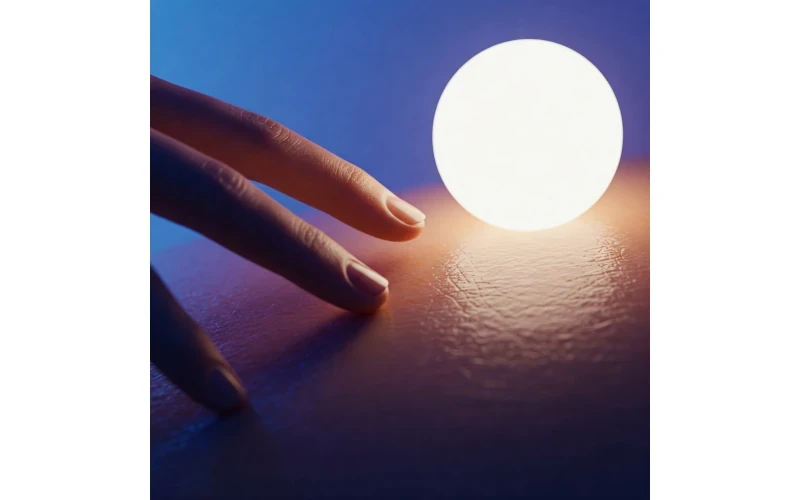
Once the light reaches the inside of a cell, it needs to be “caught” by something that knows what to do with that energy. Cells have special “antennas” called chromophores. These antennas are designed to receive light signals and turn them into biological action.
The most famous and important antenna is called Cytochrome C Oxidase (COX). This enzyme lives inside the mitochondria, which are the tiny engines of your cells. When Red or Near-Infrared light hits COX, it’s exactly like plugging a charger into a dead phone.
Other antennas include Opsins, which are found in your skin and are especially sensitive to blue and green light. There is also Melanin, which acts as a protective antenna, regulating how much light affects your skin’s pigment levels.
Did You Know? Cytochrome C Oxidase (COX) acts exactly like a solar panel for your cells. It catches the “solar energy” from the LED device and uses it to create the fuel your cells need to work faster and more efficiently.
The Mitochondrial Response: Turning on the Power
The mitochondria are the “powerhouse” of the cell. Think of them as tiny factories that produce the “batteries” your body needs to run. When the COX antenna catches the light, it triggers a “Mitochondrial Energy Cascade.”
Clinical research shows that the most important part of this process involves a molecule called Nitric Oxide (NO). Normally, Nitric Oxide can act as a “blocker” or a clog in the cell’s engine. When the light hits the cell, it physically knocks away the Nitric Oxide blocker. Once the blocker is gone, the “engine” (the COX enzyme) can finally “breathe” in oxygen again. This surge in oxygen is what allows the factory to start producing massive amounts of energy.
The Mitochondrial Energy Cascade follows this 1-2-3 path:
- ATP Production: The cell starts making more ATP (Adenosine Triphosphate). ATP functions exactly like a microscopic, fully-charged battery. With more batteries, the cell has the energy to repair damage and build new structures.
- Nitric Oxide Release: As the light knocks the NO away from the engine, the NO enters the surrounding tissue. This helps open up blood vessels, bringing in more “food” (nutrients) for your skin.
- Low-Level ROS Signaling: The cell produces a tiny amount of Reactive Oxygen Species (ROS). While a lot of ROS can be bad, a small amount acts like a text message to the rest of the cell, saying: “Hey! Let’s get to work and fix this skin!”
The Tissue Communication Network: Fibroblasts and Beyond
After one cell gets energized, it doesn’t keep the good news to itself. It starts a “phone chain” to its neighbors. This is the tissue communication network. The most important neighbors to receive this call are the fibroblasts.
Fibroblasts are the “construction workers” of your skin. Located in the dermis, they are responsible for building the collagen and elastin that keep your skin from sagging. When the energized cells send out signaling molecules, the fibroblasts spring into action, manufacturing fresh collagen to fill in wrinkles. Additionally, the light helps the skin manage cytokines, which are messengers that control inflammation. This is why LED therapy is so effective at reducing redness and helping skin feel calm and recovered.
Impact Summary: This “cellular talk” results in non-invasive skin rejuvenation. Instead of using chemicals, the light simply “convinces” your skin’s own construction crew to get back to work, leading to naturally firmer, healthier skin.
Genetic Expression: Changing the Cell’s Instructions
Perhaps the most amazing discovery in modern dermatology is that LED light can actually change the “instruction manual” your cells follow. Inside every cell is DNA, which contains the blueprints for how your body functions. LED light influences “transcription factors,” which act like a Construction Foreman who decides which blueprints to pull out of the filing cabinet.
When the light hits, it tells the Foreman to stop looking at the “breakdown and aging” files and start looking at the “rebuild and protect” files. We know this happens because scientists use “molecular microscopes”—advanced tools like proteomic analysis and qRT-PCR—to see exactly which proteins the cell is building after a light session.
- NF-κB: The light tells the Foreman to use this factor to help the cell survive stress and repair itself.
- HIF-1: This tells the body to grow new, healthy “pipes” (blood vessels), which helps wounds and scars heal much faster.
- Antioxidant Protection (SOD1): The light activates the SOD1 enzyme, which acts like a shield protecting the cell from “aging rust” (oxidative stress).
Genetic Benefits include:
- Buildup Mode: Sending “Anti-aging” instructions to stop the breakdown of collagen.
- Healing Signals: Broadcasting instructions to close wounds and fix damaged tissue.
- Shield Activation: Turning on the cell’s natural defenses against the environment.
The Specialized Workforce: How Different Cells React
Just like a city has different departments (Police, Fire, Construction), your skin has a specialized workforce of different cells. Each one has a unique reaction to the “energy surge” of LED light:
- Keratinocytes (The Roofers): These cells in the epidermis respond by strengthening the “roof.” They help repair the skin barrier and fix surface damage.
- Immune Cells (The Guards): Light therapy helps these cells stay calm. Red light reduces the “alarm signals,” stopping the skin from looking red and angry.
- Vascular Cells (The Pipes): Because light releases Nitric Oxide (NO), these cells relax. This opens up the pipes, allowing better blood flow and more oxygen to reach the skin.
- Melanocytes (The Painters): These cells control your skin’s color. A special sensor called OPN3 acts as a “calcium-controlled signal light” or color-control switch. Light therapy helps this switch stay in the right position, making sure the “painters” don’t over-paint the skin and create dark spots.
From Cells to Results: The Timeline of Change
Because this process relies on your body’s natural biological time course, results are not instant. You are waiting for a biological factory to build new proteins, and that takes time!
- Week 2: You might notice less redness. The “invisible conversation” is starting to calm down inflammation.
- Week 4: The “construction crew” (fibroblasts) has had time to build some initial new collagen. You might see a slight glow or smoother texture.
- Week 8: This is the full benefit window. By now, the cumulative effect of constant energy surges has led to significant tissue repair and firmer skin.
Consistency is key—usually 3 to 5 times a week—because cells need regular “charging” to keep the factory running at full speed.
Maximizing Your Results: The Golden Rules of Treatment

To get the best results, you must understand the “settings” on your device. It is all about the Dose.
Dose = Power (how strong the light is) x Time (how long you use it).
In clinical practice, we evaluate the trade-off between these two. If you have a very powerful light (high irradiance), you might only need 10 minutes. If your light is gentler, you might need 20 or 30 minutes. However, safety is the most important factor! We must avoid overheating the skin, as too much heat can actually cause more stress for the cells. Keeping the device at the recommended distance (usually 6 inches) ensures the light is strong enough to reach the dermis without being too hot.
Quick Start Guide:
- Surface Issues (Acne/Redness): 15–20 minutes.
- Deep Issues (Wrinkles/Firming): 30–45 minutes.
- Post-Treatment Boosters: Using a high-quality serum after treatment can provide the “bricks” your construction crew needs. Vitamin C or Hyaluronic Acid are perfect partners for energized skin cells.
Final Takeaway: Harnessing the Power of Light
The journey from a single particle of light to firm, glowing skin is a masterpiece of biological engineering. We have traveled from the “roof” of the skin house, through the “physics” of scattering and absorption, and deep into the “powerhouse” of the cell.
LED light therapy is a science-backed, non-invasive way to support your body’s own healing wisdom. By providing the energy (ATP) and the right instructions (Genetic Expression), you are simply helping your skin be the best version of itself.
Final Word: LED therapy is the ultimate partnership between modern physics and your body’s natural ability to heal from the inside out.
Disclaimer: The information in the article is for general knowledge and should not be taken as medical advice. Consult with a healthcare professional before starting any new skin treatment regimen.
Sources:
- LED Light Therapy
https://my.clevelandclinic.org/health/treatments/22146-led-light-therapy - Explainer: What’s the Science Behind How Light Rejuvenates and Heals Skin?
https://ledtechnologies.com/blog/the-science-behind-led-light-therapy-skin-rejuvenation/ - How LED Light Therapy Aids in Cellular Repair within the Skin?
https://neoelegance.co.uk/blogs/skin-science/how-led-light-therapy-aids-in-cellular-repair-within-the-skin - The Efficacy and Mechanisms of Light Therapy
https://deeplyvitalmedical.com/the-efficacy-and-mechanisms-of-light-therapy/ - Light-emitting diode therapy
https://en.wikipedia.org/wiki/Light-emitting_diode_therapy - Light‐emitting diodes in dermatology: A systematic review of randomized controlled trials
https://pmc.ncbi.nlm.nih.gov/articles/PMC6099480/ - What is LED light therapy?
https://basscoastskindoctors.com.au/blog/what-is-led-light-therapy/ - Brightening Beauty: Embracing LED Light Therapy at Bella Vida Day Spa & Salon
https://elitebeautysociety.com/brightening-beauty-embracing-led-light-therapy-at-bella-vida-day-spa-salon/ - Safety of light emitting diode-red light on human skin: two randomized controlled trials
https://pmc.ncbi.nlm.nih.gov/articles/PMC8887049/ - Strategies to achieve optimal results with LED light therapy
https://www.nourishedbs.com/blogs/news/how-to-get-the-best-results-out-of-led-light-therapy - Let there be light | LED therapy technique tips
https://www.ascpskincare.com/updates/blog-posts/let-there-be-light-led-therapy-technique-tips

Meet Donna: Founder & Lead Curator
Hi, I’m Donna, the voice and vision behind Aesthetic Thrive.
As a professional digital content creator and wellness strategist, I founded this platform to simplify the journey toward a more beautiful, balanced life. My background is rooted in a deep passion for fashion, intentional living, and holistic health. For years, I have dedicated my career to researching how the environments we build both within our bodies and in our homes directly affect our daily confidence and long-term well-being. Read More!