Hyaluronic Acid: The Ultimate Guide to Hydrated, Plump Skin
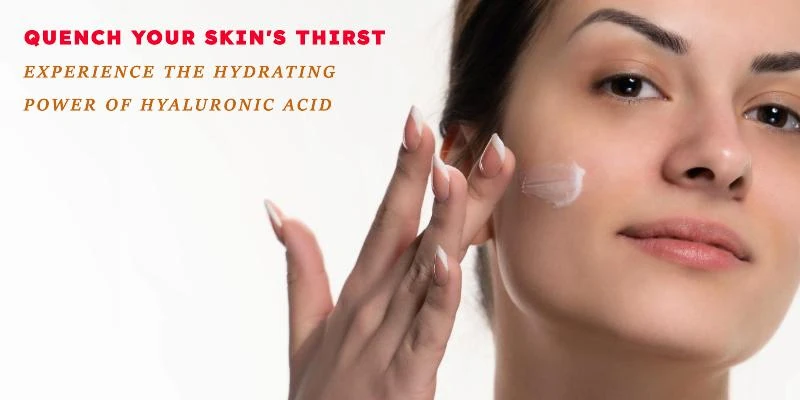
The skin is far more than just a surface we see in the mirror. Biologically, it is our body’s largest and most vital organ. It acts as a protective shield against the outside world. To do its job correctly and look its best, the skin requires one thing above all else: constant, reliable hydration. However, for many people, achieving that healthy glow is a struggle. We often face the common frustration of skin that feels tight, looks dull, or shows the early signs of aging like fine lines and a loss of volume. In the world of modern aesthetics and professional skincare, one molecule stands above the rest as the “gold standard” for solving these issues: Hyaluronic Acid.
The purpose of this guide is to provide a comprehensive, expert-led exploration of Hyaluronic Acid. We will go beyond the marketing buzzwords to understand the biology, the chemistry, and the strategic application necessary to achieve a radiant, healthy complexion.
A Note on My Methodology (The “How”): Before we dive into the science, it is important to understand where this information comes from. As a formulator, my expertise is rooted in clinical observation and laboratory research. I have spent countless hours in the lab observing how Hyaluronic Acid behaves under a microscope and during stability testing. By testing how HA reacts to different temperatures, pH levels, and humidity environments, I have developed a deep understanding of how to make this ingredient work for your specific skin type. This guide is built on those professional observations and the latest dermatological standards.
- Defining the Molecule: What is Hyaluronic Acid?
- The Science of Molecular Weight: Why Size Matters
- The 6 Core Benefits of Hyaluronic Acid for Skin Health
- The Arid Environment Warning: Avoiding the "Dehydration Trap"
- Strategic Application: How to Layer HA for Maximum Plumping
- Evaluation Criteria: Choosing the Right HA Product
- Conclusion: The Foundation of Lifelong Skin Vitality
- Meet Donna: Founder & Lead Curator
Defining the Molecule: What is Hyaluronic Acid?
It is a common mistake to think that because it has the word “acid” in its name, Hyaluronic Acid is a harsh chemical designed to peel or burn the skin. In reality, the opposite is true. HA is a glycosaminoglycan, which is a fancy scientific name for a long chain of sugar molecules naturally found in our own bodies. It is an essential biological component. According to the Cleveland Clinic, its primary function is to keep tissues well-lubricated and moist.
You can think of a humectant as a high-powered “moisture magnet.” Biologically, Hyaluronic Acid is famous for its incredible ability to hold up to 1,000 times its own weight in water. Imagine a tiny sponge that can grow 1,000 times larger when it gets wet—that is exactly what HA does beneath your skin’s surface. In a young, healthy body, HA is abundant, keeping our tissues supple, bouncy, and well-hydrated.
The “So What?” Layer: Why Supplementation is Critical
If our bodies make it naturally, why do we need to buy it in a bottle? The reality is that as we age, our natural production of Hyaluronic Acid begins to drop significantly. This is not just about “looking old”; it is a functional decline.
When your natural HA levels drop, your skin loses its “dermal matrix”—the internal support structure that keeps it firm. This leads to a “sagging” effect. Without enough HA, your skin cannot hold onto water, causing it to become thinner and more fragile. By using topical Hyaluronic Acid, you are not just “putting on lotion.” You are providing a supplemental reservoir of hydration that helps the skin maintain its structural integrity and youthful bounce. In the competitive skincare market, HA has become a non-negotiable foundation because it addresses the core cause of skin aging: dehydration.
The Science of Molecular Weight: Why Size Matters
One of the most important secrets I share is that not all Hyaluronic Acid products are created equal. In fact, many “cheap” drugstore serums use only one type of HA, which limits their effectiveness. The molecular weight is what matters most. The effectiveness of an HA product depends entirely on the size of the molecules inside the bottle.
The molecules in the Dalton (Da) measurement only tell us exactly how deep the ingredient can go into your skin.
High Molecular Weight (HMW) Hyaluronic Acid
HMW molecules are the “big” versions of the molecule, usually measuring 1.5 million Daltons or higher. Because these molecules are so large, they cannot get past the top layer of your skin. Instead, they sit on the very surface.
This is actually a very smart strategy. HMW Hyaluronic Acid forms a visible and functional moisture barrier. It acts like a breathable “raincoat” for your face. It stops water from evaporating into the air and gives you an immediate smoothing effect that you can see and feel right away.
Low Molecular Weight (LMW) Hyaluronic Acid
LMW molecules are much smaller, typically measuring 50,000 Daltons or less. These tiny molecules are designed to travel deeper into the skin’s layers. Once they get beneath the surface, they bind to water to provide “inner” plumping. This is where the long-term magic happens. LMW HA helps improve skin texture and firmness over time, rather than just giving you a temporary surface glow.
The Power of “Multi-Molecular” Formulations
In the competitive landscape of professional skincare, the best brands have moved away from “single-weight” formulas. If a serum only has big molecules, it only hydrates the surface. If it only has tiny molecules, your surface might still feel dry.
The “So What?” here is simple: to get real results, you need a multi-molecular formulation. This is a blend of different weights that targets every level of the skin at once. When I formulate a high-end serum, I include at least three different weights. This ensures that the skin is being hydrated from the inside out and protected from the outside in. Choosing a multi-molecular product is the difference between a product that merely “feels nice” and one that actually transforms your skin’s health.
The 6 Core Benefits of Hyaluronic Acid for Skin Health

When we talk about skin health, we aren’t just talking about vanity. We are talking about the functional integrity of the skin barrier. Hyaluronic Acid provides six essential benefits that help your skin function as a healthy, protective organ.
1. Deep Hyaluronic Acid Hydration
This is the “moisture magnet” effect. Because HA can hold so much water, it provides intense hydration. When I observe skin cells treated with HA under a microscope, they appear “swollen” and healthy, like a grape compared to a raisin. This transformation from dry and thirsty to supple and refreshed is the hallmark of HA.
2. Barrier Strength and TEWL Prevention
The skin barrier is your body’s first line of defense. When it is weak, you suffer from Transepidermal Water Loss (TEWL). This is a scientific term for when the water inside your body simply evaporates through your skin and into the air. Hyaluronic Acid helps strengthen this barrier by locking moisture in place. It acts like a seal, making it harder for the environment to steal your skin’s water.
3. Hyaluronic Acid for Elasticity and Firmness
Hydration is directly connected to “snap-back.” Think of a dry kitchen sponge versus a wet one. The wet sponge is flexible, soft, and resilient. By boosting your hydration levels, HA helps your skin maintain its elasticity. This leads to a firmer appearance that can withstand the “stretching” that happens when we smile, squint, or sleep.
4. Visible Fine Line Reduction
Most “wrinkles” are actually just deep dehydration lines. When your skin lacks moisture, it “deflates,” which makes every tiny line look like a deep canyon. By filling the skin’s moisture reservoir, Hyaluronic Acid creates an “instant plumping effect.” This fills in the lines from the inside out, making the surface of your skin look much smoother and more refined.
5. Soothing Properties for Reactive Skin
While some anti-aging ingredients can be irritating, HA is incredibly gentle. It actually helps soothe and calm skin that is red or reactive. By fixing the moisture barrier, HA reduces the chance of inflammation. It creates a “calm environment” for your skin cells to recover from stress.
6. Non-Comedogenic Safety for Acne
Many people with oily skin avoid moisturizers because they are afraid of breakouts. However, oily skin still needs water. Hyaluronic Acid is non-comedogenic, meaning it will not clog your pores. It provides “oil-free” moisture. This is vital because it hydrates the skin without adding heavy oils that can cause congestion or acne.
By combining these six benefits, HA can transform a dull, tired-looking face into a radiant complexion. However, as an expert, I must warn you: there is a specific way you must use it to avoid a common “Dehydration Trap.”
The Arid Environment Warning: Avoiding the “Dehydration Trap”
This is a critical “insider” insight that general beauty guides almost always miss. Because Hyaluronic Acid is such a powerful moisture magnet, it must get that water from somewhere. It draws moisture from the humidor of two places: the air around you or the deeper layers of your own skin.
In a humid environment (like a tropical beach), the HA molecule pulls moisture from the air and feeds it to your skin. This is the ideal scenario. However, in extremely dry or arid environments—such as a desert climate, a dry airplane cabin, or an office with high air conditioning—the air is empty. When the relative humidity drops below 40%, there is no moisture for the HA to grab.
In this case, a process called osmosis happens. The HA molecule begins to pull water out of the deeper layers of your skin to bring it to the surface. If you do not “seal” that moisture in, it will evaporate into the dry air. This leaves your skin even drier than it was before you applied the serum. This is the “Dehydration Trap.” To prevent this,
I always use the “moisture sandwich” technique, apply HA to damp skin, and immediately seal it with a cream to “trap” the water inside.
Strategic Application: How to Layer HA for Maximum Plumping
In the lab, we know that the sequence of application is the most critical factor in achieving results. If you apply HA to bone-dry skin, you are wasting your money. Follow this “Master Routine” to ensure your skin gets the full plumping effect.
Step 1: Cleansing
Start with a clean canvas. Use a gentle, professional-grade cleanser that won’t strip your natural oils. I often recommend the La Roche Purifying Facial Cleanser. It is soap-free and designed to keep the skin’s pH balanced, which is essential for the HA to work properly later.
Step 2: The “Damp Skin” Rule
This is the most important step in the entire routine. Do not dry your face with a towel. Leave your skin dripping wet or damp. Hyaluronic Acid needs water to grab onto. By leaving your skin wet, you are giving the HA molecule a source of hydration to bind with immediately.
Step 3: Apply the Hyaluronic Acid Serum
Apply a few drops of your serum to your damp face. Gently pat it into the skin. As you do this, the HA will bind to the water on your skin’s surface and begin pulling that hydration into the deeper layers of your face.
Step 4: Seal the Moisture
You must apply a moisturizer or an occlusive oil over your HA serum. Think of the HA as the “water” and the moisturizer as the “lid” on a jar. If you leave the lid off, the water will evaporate. The moisturizer ensures the HA stays in the skin where it belongs. Skipping this step renders the serum significantly less effective and can even lead to the “Arid Trap” mentioned earlier.
Evaluation Criteria: Choosing the Right HA Product
When you walk down the skincare aisle, every bottle claims to be the best. As a formulator, I look at the labels differently. To avoid “marketing fluff” and find a serum that actually delivers clinical results, use this expert checklist:
- Look for “Sodium Hyaluronate”: On the ingredient list, you want to see this term. This is the stable salt form of Hyaluronic Acid. Clinically speaking, it is much more stable, less likely to spoil (oxidize), and has a smaller molecular size, which means it penetrates the skin much better than pure HA.
- Verify the Concentration: Look for a concentration between 1% and 2%. If the concentration is too low (like 0.1%), it won’t do much. If it is too high (above 4%), it can actually become too thick and may pull too much water out of your skin.
- Check for “Multi-Molecular” Labels: Ensure the product mentions a mix of weights. This guarantees that you are getting both surface protection and deep-layer plumping.
- Identify Complementary Ingredients: HA works best when paired with other actives. Look for Vitamin C (to protect from the sun), Niacinamide (to shrink pores), or Peptides (to build collagen).
- Position on the Ingredient List: Ingredients are listed from highest to lowest concentration. If “Sodium Hyaluronate” is the very last ingredient on a long list, the product likely only contains trace amounts. It should be in the top half of the list.
As noted in reports by Forbes, the quality of how a product is made matters far more than a high price tag or a fancy bottle. A well-formulated, high-concentration serum is a strategic investment in your skin’s long-term health.
Conclusion: The Foundation of Lifelong Skin Vitality
In the complex and often confusing world of skincare, Hyaluronic Acid remains a non-negotiable component of any modern strategy. It is not just a trend or a “buzzword”; it is a biological necessity. By understanding that HA is a moisture magnet that requires water to work, you can avoid the mistakes that most people make.
To achieve the best results for your complexion, remember the professional rules: always apply to damp skin, use a variety of molecular weights (from high to low Daltons), and always seal your serum with a quality moisturizer.
Following these steps will ensure that your skin doesn’t just look hydrated for an hour but stays healthy, vibrant, and plump for a lifetime.
Maintaining a radiant complexion starts with a deep, scientific understanding of the tools at your disposal. When used correctly and strategically, Hyaluronic Acid is the true foundation of lifelong skin vitality.
- Hyaluronic Acid
https://my.clevelandclinic.org/health/articles/22915-hyaluronic-acid - What Is Hyaluronic Acid? Benefits, Uses And More
https://www.forbes.com/health/supplements/hyaluronic-acid/ - How to Use Hyaluronic Acid for the Skin: The Dos & Don’ts
https://www.cetaphil.com/us/skincare-tips/skincare_guides/hyaluronic-acid-for-skincare.html

Meet Donna: Founder & Lead Curator
Hi, I’m Donna, the voice and vision behind Aesthetic Thrive.
As a professional digital content creator and wellness strategist, I founded this platform to simplify the journey toward a more beautiful, balanced life. My background is rooted in a deep passion for fashion, intentional living, and holistic health. For years, I have dedicated my career to researching how the environments we build both within our bodies and in our homes directly affect our daily confidence and long-term well-being. Read More!