NASA Red Light Therapy: The Evolution of LED Light Therapy At Home

The Space Technology Behind Your Skincare
It sounds like a story from a science fiction book. You put on a glowing red mask, and your skin begins to look younger and smoother. While it might feel like a movie prop, the technology you use for your skin today was actually refined in the labs of NASA. As a Senior Health Technology Specialist, I have seen many gadgets come and go. However, the move of light therapy from space stations to your bathroom is a true strategic evolution.
Space is a very harsh place for the human body. Because of this, NASA scientists had to find ways to keep astronauts healthy when they are far from Earth. By solving the problems of living in a spacecraft, they created a shortcut for better skincare on our planet. This technology is not just about looking good. It is about the science of repair. When we use these devices, we are using “space-born” evidence to fix our skin from the inside out.
So What? The link between deep space and your face is all about survival. In a spaceship, your body does not heal the way it does on Earth. NASA found that certain colors of light could “trick” cells into working harder to repair themselves. If this light can help an astronaut living in a metal tube near Mars, it can definitely help you at home. This history turns a simple beauty gadget into a powerful medical tool. To understand how it helps your face, we must first look at a very specific problem: the Space Garden.
The Space Problem: Growing Plants in the Dark

When NASA looks at long trips to other planets, they face a big hurdle: food. You cannot pack enough snacks for a three-year trip to Mars. Astronauts need to grow their own gardens. But growing plants inside a small spacecraft is very difficult. Traditional light bulbs are heavy, use too much power, and get very hot. In a tiny spaceship, too much heat can break the cooling systems and hurt the crew.
NASA needed a “cool” light source that was small and efficient. They turned to LEDs (Light Emitting Diodes). Unlike the bulbs in your house that get hot to the touch, LEDs are “cool” lights. They convert energy into light without wasting it as heat. This was a major engineering breakthrough. It allowed NASA to put light very close to delicate plants without burning them.
So What? This engineering choice is the reason we can wear LED masks on our faces today. Because LEDs do not get hot, they are safe to put directly against your skin. This proved that we could use intense light energy for long periods without the risk of burns. This discovery laid the foundation for LED Light Therapy in Skincare. It was the first time scientists saw that light could be both powerful and gentle at the same time.
The Discovery: From Plant Growth to Human Healing

While the scientists were busy growing space lettuce, they noticed something amazing. The cuts and scratches on their hands were healing much faster than usual. In space or in high-tech labs, small wounds usually take a long time to close because the body is under stress. However, under the red lights meant for the plants, the scientists’ skin was fixing itself in record time.
This was an “accidental” discovery that changed everything. NASA shifted its focus from agriculture to human biology. They began to study how light could help astronauts who suffer from muscle loss, bone deterioration, and immune deficiency. In the microgravity of space, the body struggles to keep its tissues strong. Wounds can become oxygen-deprived, meaning they don’t have enough “fuel” to heal.
So What? This accidental discovery provided the “space-born” evidence needed to treat light as medicine. It showed that light could reach beneath the surface of the skin to help the deep tissues. For astronauts, this meant staying strong in space. For you, it means light can reach deep enough to fix LED Light Penetration in Skin. This shifted the technology from a way to grow food to a way to rebuild the human body.
The Medical Breakthrough: Dr. Harry Whelan and NASA Research
NASA did not just rely on a lucky guess. They funded serious research to prove this worked. A key leader in this journey was Dr. Harry Whelan, a professor at the Medical College of Wisconsin. He received grants from NASA and the National Institutes of Health (NIH) to study how LEDs could heal serious injuries.
A major partner in this work was a company called Quantum Devices Inc. (QDI). Together, they developed a special technology called QDI’s HEALS. This stands for High Emissivity Aluminiferous Light-emitting Substrate. That is a very big name for a special metal base that helps LEDs stay cool while pushing out a massive amount of healing energy. This led to the creation of the WARP 10 unit. In 2003, this technology earned FDA clearance, proving it was safe and effective for treating pain and healing wounds.
So What? This medical-grade history is what sets real LED devices apart from cheap “beauty toys.” When a device has a history with Dr. Whelan and QDI, you know it is based on millions of dollars of research. It gives the technology “E-E-A-T”—Expertise, Experience, Authoritativeness, and Trustworthiness. This is why doctors trust light therapy to treat everything from sore muscles to aged skin.
The Science of Light: Understanding Photobiomodulation
To understand how light works, we use a term called Photobiomodulation. I can explain it like this: your skin cells are like a cell phone. When the battery is low, the phone is slow and might even turn off. To make it work again, you have to plug it into a battery charger.
Photobiomodulation is like a battery charger for your cells. Deep inside every cell is a tiny “powerhouse” called the mitochondria. When you shine red or near-infrared light on your skin, the mitochondria soak up the light energy. This gives the cell a huge burst of “fuel.” With this extra energy, the cell can work faster to repair damage, kill bacteria, and build new skin.
So What? The strategic secret of light therapy is the depth. Not all light is the same. Red light (around 633nm) is great for the surface. Near-infrared light (around 830nm) is the “magic number” because it goes much deeper. It reaches the parts of the skin where Collagen for Skin: The Key to Youthful Radiance is actually made. By “charging” the mitochondria, we are forcing the skin to act younger than it actually is.
Wavelengths and Their Benefits: A Technical Breakdown
To get results, you must use the right “color” or wavelength of light. Each one has a specific job based on how deep it can go into your tissue.
Light Comparison and Penetration Table
| Light Color | Wavelength | Penetration Depth | Main Benefit |
| Blue Light | 415nm | Shallow (Surface) | Kills acne-causing bacteria |
| Red Light | 633nm | Mid-depth (Dermis) | Boosts collagen and smooths lines |
| Near-Infrared | 830nm | Deep (Hypodermis) | Deep healing and inflammation control |
The Power of Wavelength Synergy
Using these lights together is even better. For example, using Blue and Red light at the same time is a powerful way to fight breakouts. The blue light kills the germs, while the red light calms the redness and swelling. This combined effort is much faster than using just one color.
So What? Choosing the right wavelength is a strategic move. If you are struggling with Uneven Skin Texture – Causes and Solutions, you need Red light to smooth out the bumps. If you are worried about Enlarged Pores: Causes, Prevention, and Treatment, a mix of Red and Near-Infrared can help tighten the skin around the pore, making it look much smaller.
Professional Adoption: Dermatologists and Aestheticians

After the NASA data was published, skin doctors (dermatologists) were the first to use it. They took the NASA protocols and created high-power machines for their clinics. These first-generation systems were very expensive and required special training to use.
Eventually, this led to a business model evolution in spas and clinics. Instead of just getting a facial with creams, clients could now get a “light bath.” Companies like LightStim created professional panels that allowed aestheticians to target the whole face at once. This made the treatments faster and more effective.
So What? Professional adoption gave light therapy its “Earth-bound” proof. Experts found that “targeted application”—using the right amount of light for the right amount of time—yielded much better results. This transition from NASA labs to high-end clinics proved that light therapy was a serious alternative to harsh chemical peels or surgery.
The Consumer Market: Evolution of At-Home Devices

For a long time, you could only get this treatment if you were an astronaut or a wealthy person at a clinic. But engineering kept getting better. The biggest hurdles were battery life and making the devices comfortable. The first home tools were small handheld wands. They were difficult to use because you had to hold them against your face for a long time.
Today, we have flexible silicone masks. These use the same photobiomodulation principles but are much easier to use. They are hands-free, allowing you to relax while the light does the work.
So What? This is a major shift in Price-to-Performance. In the past, one session at a clinic could cost $200. Now, you can own the “energy source” for a one-time cost. This is a strategic shift in healthcare autonomy. You are no longer just a “patient” waiting for a doctor; you are now the “specialist” in charge of your own skin health at home.
Buyer’s Guide: Avoiding “Thin” Technology

Not every red light is a healing light. Some cheap masks are just “red-colored toys.” They use basic light bulbs that don’t have enough power to reach your cells. To find a quality device, you must look for three things:
Irradiance and Treatment Efficiency Table
| Irradiance Level (mW/cm²) | Quality Level | Treatment Time Needed | Result |
| 10 – 30 mW/cm² | Low (Cheap Toys) | 60+ Minutes | Mostly surface heat; little healing |
| 40 – 70 mW/cm² | Medium (Good Home Use) | 15 – 20 Minutes | Good for skin tone and glow |
| 80 – 100+ mW/cm² | High (Professional) | 5 – 10 Minutes | Deep repair; builds collagen fast |
- Irradiance (Light Strength): Measured in mW/cm². This is how much energy is actually hitting your skin. Low irradiance means the light will just bounce off your face.
- Dose (Total Energy): This is the “satisfying experience.” If a device has high irradiance, you get your dose in 10 minutes. If it is weak, you might need to wear it for two hours to see a change!
- Safety Features: Look for FDA clearance. This ensures the light won’t hurt your eyes or skin and that the company is telling the truth about their science.
So What? Low-quality devices don’t have the power to charge your mitochondria. A high-quality device is a strategic investment in your skin’s future.
The Technological Breakthroughs for Home Use LED Therapy Devices
The transition of LED therapy from specialized clinical environments to household convenience was not merely a matter of miniaturization, but the result of several critical engineering innovations designed to provide a “satisfying experience” for the end-user.
1. Optimization of LED Efficiency and Thermal Management
A primary hurdle for early consumer devices was the “excessive heat” generated by high-output bulbs, which often compromised safety and comfort. High-quality technological breakthroughs in LED efficiency now allow modern devices to deliver “therapeutic doses of light” without significant heat emission or high energy consumption. This advancement is crucial for ensuring that light intensity and penetration are sufficient to stimulate “cellular repair” and “collagen production” without risking thermal damage to the skin.
2. Battery Advancements and Flexible Form Factors
The move toward “cordless and portable operation” was made possible by significant leaps in battery technology. This shift allowed for “form factor innovations” that moved beyond cumbersome handheld units to include:
- Flexible LED Face Masks: Designed for “comfortable and hands-free treatment,” allowing users to maintain a consistent “proximity to the skin” for maximum light absorption.
- Targeted LED Wands: Optimized for “targeted application” on specific areas.
- Portable Panels: Smaller, manageable arrays that allow for treating larger body areas while remaining “user-friendly”.
3. Precision Wavelength Targeting
To provide a “substantial, complete, or comprehensive description” of the technology, it is essential to understand the specific wavelengths enabled by these breakthroughs. Modern consumer devices now utilize precise spectrums to address various “skin concerns”:
- 415nm (Blue): Targeted for “acne and bacteria reduction”.
- 633nm (Red): Optimized for “collagen stimulation” and “inflammation reduction”.
- 830nm (Near-Infrared): Engineered for deeper “tissue repair” and “skin rejuvenation”.
4. Automated Protocols and Safety Interfaces
To help users “achieve their goal” without professional supervision, the engineering focus shifted toward “user interface simplification”. Breakthroughs in control systems have led to “automatic timed cycles” and “audible alarms,” ensuring that the device operates within “safe parameters”. These safety features are paramount for “unsupervised use,” minimizing potential risks while maintaining the “momentum for further exploration” of at-home aesthetic technology.
While the “price-to-performance ratio” continues to improve, these technological breakthroughs collectively ensure that modern at-home solutions are a “direct lineage” from the rigorous standards established by NASA’s original investigations into photobiomodulation.
Building Your NASA-Inspired Routine
To get “space-grade” results, you need a smart plan. Light travels best through skin that is clean and clear of barriers.
Step 1: Deep Cleansing
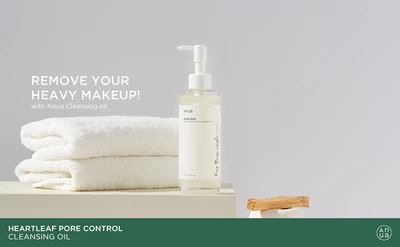
Start with a clean face. I recommend ANUA Heartleaf Pore Control Cleansing Oil to remove oils that might reflect the light. If you struggle with breakouts, the SkinSmart Facial Cleanser for Acne is a perfect way to prep your skin safely.
Step 2: Gentle Exfoliation
Once or twice a week, remove dead skin cells. This allows the light to go deeper. Paula’s Choice 2% BHA Liquid Exfoliant is a favorite because it clears the “pathway” for the light wavelengths.
Step 3: The Light Session
Put on your device. You should feel a very gentle, soothing warmth. It should not be hot. This is a great time to close your eyes and breathe. The sensory experience of the light is very relaxing for the mind as well as the skin.
Step 4: Nutrients and Protection
After your session, your cells are “charged” and ready to work. This is the best time to apply a serum. You can read a TruSkin Vitamin C Serum Review to see how this antioxidant works even better when your skin’s energy is high. Finish with The Hydrating Power of Hyaluronic Acid to lock in moisture. For your body, use Eos Shea Better Body Lotion to keep your skin soft and hydrated.
So What? There is a powerful synergy between light and topical products. Light therapy prepares the “soil” of your skin, and your serums are the “seeds.” By combining them, you make every dollar you spend on skincare work twice as hard.
Conclusion: The Future of Light and Skin
The journey of red light therapy is a miracle of modern science. It began as a way to grow plants in the dark silence of space. It became a way to keep astronauts from getting sick. Now, it is a tool you can use while sitting on your couch. While NASA started the fire, decades of Earth-bound science have perfected the flame.
So What? This “Space Heritage” is a gift to our daily lives. We are moving away from harsh chemicals and moving toward natural, light-based healing. This technology is the future of beauty because it is safe, it does not hurt, and it is backed by the smartest minds at NASA and the NIH. Whether you are using Castor Oil for Hair Growth or applying Kate Blanc Cosmetics Organic Castor Oil to your lashes, adding NASA-inspired light therapy takes your routine to the next level. The stars may be far away, but their healing light is right here, helping you shine every day.
Sources:
- NASA Research Illuminates Medical Uses of Light
https://spinoff.nasa.gov/NASA-Research-Illuminates-Medical-Uses-of-Light - A NASA discovery has current applications in orthopaedics
https://pmc.ncbi.nlm.nih.gov/articles/PMC4272231/ - Can LED face masks transform your skin? Here’s what the experts say:
https://www.bbc.com/news/articles/c334jg7lvz0o - History of Light and LED Therapy – LightStim+ Professional
https://lightstimpro.com/blogs/articles/history-of-light-and-led-therapy - Illuminating Discoveries: The Evolution of NASA and LED Light Therapy for Skincare
https://www.trynutriskin.com/blogs/news/illuminating-discoveries-the-evolution-of-nasa-and-led-light-therapy-for-skincare-1 - LED Device Illuminates New Path to Healing
https://spinoff.nasa.gov/Spinoff2008/hm_3.html - Review: This LED Light Therapy Brightens And Plumps Skin, According To A Dermatologist
https://www.womenshealthmag.com/beauty/a39466191/led-light-therapy-review/ - Lighting the Way for Quicker, Safer Healing
https://spinoff.nasa.gov/Spinoff2005/hm_1.html - NASA and Red Light Therapy: A Modern Technology for Healing
https://platinumtherapylights.ca/blogs/news/nasa-red-light-therapy - Phototherapy with Light Emitting Diodes
https://pmc.ncbi.nlm.nih.gov/articles/PMC5843358/

Meet Donna: Founder & Lead Curator
Hi, I’m Donna, the voice and vision behind Aesthetic Thrive.
As a professional digital content creator and wellness strategist, I founded this platform to simplify the journey toward a more beautiful, balanced life. My background is rooted in a deep passion for fashion, intentional living, and holistic health. For years, I have dedicated my career to researching how the environments we build both within our bodies and in our homes directly affect our daily confidence and long-term well-being. Read More!