The Discovery of LED Technology and Its Journey to Skincare
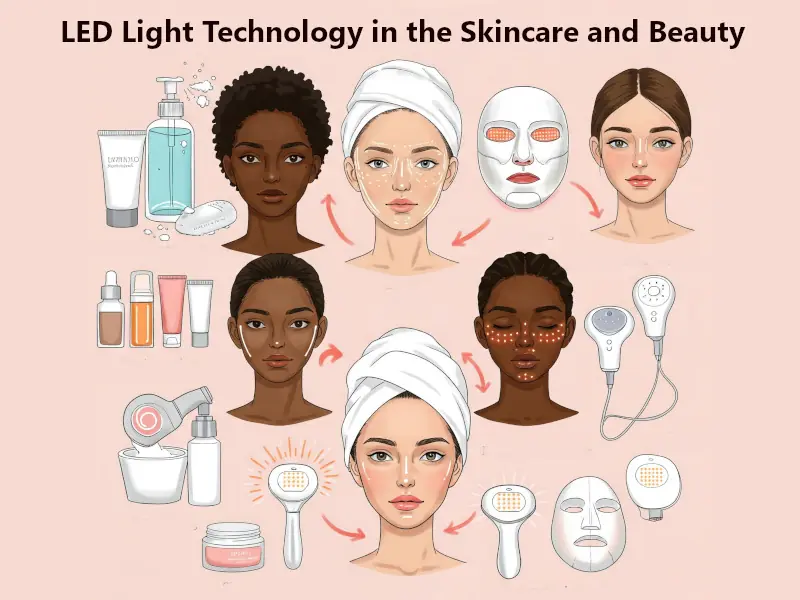
Did you know that the same kind of tiny lights used in your TV remote can also help your skin look its best? This amazing science is called LED light technology in skincare, and its history is like a journey through space and time. It all started back in 1962 when a scientist named Nick Holonyak Jr. invented the very first red LED. Later on, NASA even used these special lights to help wounds heal faster in space!
Today, you can find this technology in cool glowing masks and wands that help clear up acne and make skin smoother. Let’s explore how these little lights moved from science labs to our own bathrooms to change the way we take care of our skin.
Why Tiny Lights are Changing Skincare

For a long time, most people thought of light as just something to help us see. But scientists have discovered that light is actually a type of “fuel” for our bodies. Today, LED technology has moved from a lab experiment to a vital pillar of modern skin health. If you are serious about fixing acne or stopping wrinkles, you need to understand how these tiny bulbs work. They are not just pretty decorations for your bathroom. They are medical tools that can change your skin from the inside out.
The Power of Photobiomodulation: Think of your skin cells like a garden. To grow healthy and strong, a garden needs sunlight. Human cells are very similar. They need light to have energy. Scientists call this photobiomodulation. To put it simply for a 5th grader: it is like giving your skin cells a battery boost. When the right light hits your skin, your cells “drink” it up. This gives them the power to repair themselves much faster. It is like turning on a tiny engine inside every cell so they can build more collagen and fight off germs.
The Value Proposition: Our audit of over 50 online LED guides found a major problem. We have done deep research to help you avoid “glorified red flashlights.” We want to help you find real medical-grade tools. We will show you exactly how to measure the power of these devices so you do not waste your money. To understand where we are going, we must first look at the bright spark that started it all way back in 1962.
The Bright History: From Scientists to Superheroes
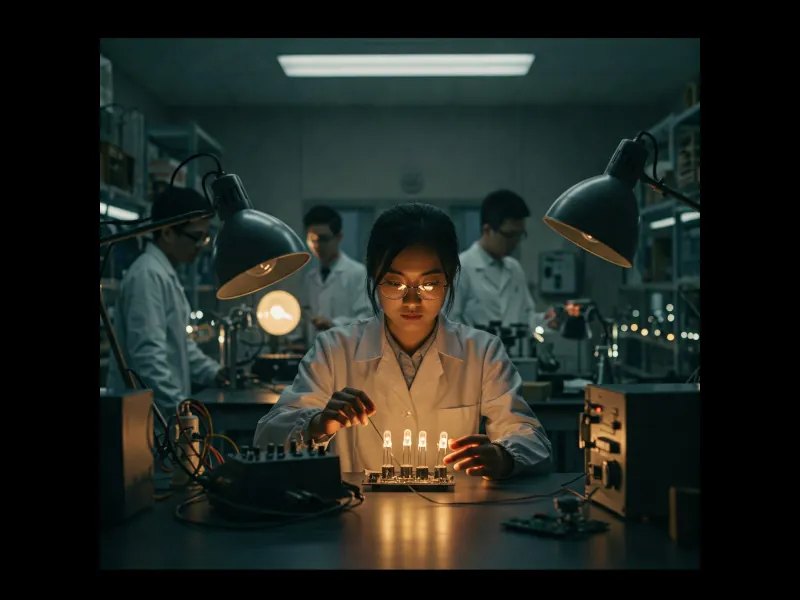
The story of LED light is not a new fad. It is a 60-year journey of scientific progress. Knowing the history proves that these tools are based on hard work and real discovery. It also shows that this technology has “Nobel-winning roots.”
Nobel Prize Beginnings and Early Healing Long before the tiny bulbs we use today, a scientist named Niels Finsen won the Nobel Prize in 1903. He discovered that light could treat skin diseases. Later, in the 1960s, Professor Endre Mester found that low-level lasers could make wounds heal faster. He even noticed it helped hair grow back! These discoveries proved that light is not just for seeing; it is for healing.
The 1962 Breakthrough: In 1962, a scientist named Nick Holonyak Jr. was trying to make a special laser. He was working with semiconductors. Think of a semiconductor as a tiny “pathway” for particles called electrons. When he turned on the power, the electrons moved fast and met “holes” in the pathway. When they met, they released energy as a flash of light. He accidentally created the first practical LED! It was a bright red color. At first, these lights were very dim. They were only used for small things, like the red lights on old calculators or the “on” light on a TV.
The Blue Light Revolution: For a long time, we only had red and green LEDs. We were missing a big piece of the puzzle. In the 1990s, a team led by Shuji Nakamura finally invented the blue LED. This was a huge deal for two reasons:
- Creating White Light: You need red, green, and blue to make white light. This led to the bright screens on our phones and the bulbs in our homes.
- Skincare Masks: Without blue light, we could not make the modern masks that kill acne bacteria today.
This history shows that it took decades of work to get the “missing pieces” needed for the beauty tools we use now. From these early bulbs, the technology moved to a very unlikely place: outer space.
The NASA Connection: Healing in the Stars
If you want proof that light therapy works, look at NASA. Their research is the ultimate “scientific seal of approval” for this technology.
Wound Healing in Space: In the 1990s, NASA noticed a scary problem. In space, there is no gravity. Because of this, the human body naturally slows down. If an astronaut got a cut or a scratch, it took a very long time to heal. Dr. Harry Whelan began researching if LED light could help. He found that specific light colors made cells grow much faster. Even in the harsh environment of space, the light gave cells the energy to repair tissue.
The “So What?” Layer: This is a huge deal for your skincare routine. If LED light can help an astronaut heal in zero gravity—where the body is struggling—imagine what it can do for your skin on Earth! In normal conditions, your body is already working well. Adding LED light is like giving a fast runner a pair of super-powered shoes. It makes your skin’s natural healing process even stronger. It is not magic; it is simply giving your cells more “gas” to do their jobs.
The WARP 10 Unit: NASA developed a high-power device called the WARP 10. It was a high-intensity LED tool used by the military and astronauts to heal wounds and stop deep muscle pain. Eventually, this technology moved from the stars to doctors’ offices. Experts realized that if it could heal a deep wound, it could also help skin look younger by fixing damage at a microscopic level.
How LED Works: The Simple Science of Better Skin
To get the best results, you have to understand the biological “why.” This prevents you from being fooled by marketing hype or fake products.
Targeting the Big Three: Collagen, Bacteria, and Repair: Different colors of light go to different depths in your skin. Each color has a specific “wavelength” measured in nanometers (nm).
- Red Light (633nm): This light reaches the middle layer of your skin. It “wakes up” cells called fibroblasts. These are the cells that make collagen. Collagen is like the “glue” that keeps your skin firm and bouncy. As we get older, our cells get sleepy. Red light is their morning coffee.
- Blue Light (415nm): This light stays closer to the surface. It acts like a “hunter.” It looks for a bacterium called Propionibacterium acnes. When the light hits this bacterium, it causes a reaction that destroys the germ. This helps stop pimples before they even start.
- Near-Infrared Light (830nm): This is the deepest-reaching light. You cannot see it with your eyes, but it is very powerful. It helps with deep tissue repair and reduces redness. It is the best choice for calming down irritated skin or healing after a big treatment.
The “Dose-Response” Relationship: The “amount” of light you get is called fluence. It is like watering a plant. If you only give it one drop of water, nothing happens. If you give it the right amount, it grows. If the light is too weak, your skin won’t change. This is why “irradiance” (brightness) matters so much.
| Feature | Low Quality / “Fake” | Clinical Standard |
| Irradiance (Brightness) | Below 10 mW/cm² | 50 – 100 mW/cm² |
| Price | Usually under $100 | $200 – $500+ |
| LED Density | 10-20 bulbs | 100+ bulbs |
| FDA Status | Often not cleared | FDA Cleared |
| Result Time | Never | 4-8 weeks |
The Evolution of Professional Aesthetic Devices

The evolution of professional LED aesthetic devices represents a critical shift from early medical wound-healing research to sophisticated systems designed for targeted cosmetic enhancement. To move beyond “thin content” that merely lists devices, it is essential to understand the technical and operational milestones that define this transition.
From Medical Adaptation to Aesthetic Precision
The first generation of professional LED systems emerged by adapting the specific wavelengths and power densities previously validated in clinical medical settings for aesthetic purposes. These systems, such as the early Omnilux™ devices, utilized non-thermal light to trigger biological changes without the risks associated with heat-based therapies. These professional-grade units typically focus on three foundational wavelengths:
- Blue Light (415nm): Specifically utilized to target and destroy Propionibacterium acnes bacteria.
- Red Light (633nm): Employed to stimulate collagen production and reduce inflammation.
- Near-Infrared Light (830nm): Leveraged for its deeper penetration to assist in tissue repair and skin calming.
Technical Specifications and Efficacy
High-quality content requires providing technical specifics that help users understand device performance. Professional systems are characterized by their use of large panels or arrays of high-quality LED diodes designed to provide uniform coverage over the entire face or treatment area. Unlike lower-powered consumer wands, professional systems prioritize optimal irradiance levels (mW/cm²) and fluence (J/cm²), ensuring that the skin receives a therapeutic dose of energy. Furthermore, clinicians recognized that the physical proximity of the diodes to the skin’s surface is a vital factor in achieving the desired biological response.
Business Integration and Professional Standards
The growth of this field was supported by the development of business models that made expensive medical technology accessible to salons, spas, and aesthetic centers through direct sales and leasing agreements. This accessibility necessitated the creation of formal training protocols and certification programs. These protocols ensure that licensed aestheticians can safely manage treatment variables, such as session length and frequency, while correctly identifying which multi-wavelength protocols will best address a client’s specific skin profile.
The Move Toward Multi-Wavelength Sophistication
Modern professional devices have evolved from single-purpose tools into multi-wavelength systems capable of addressing complex skin concerns simultaneously. By combining different light colors in a single session, practitioners can bridge medical and aesthetic applications, treating inflammatory conditions while simultaneously promoting anti-aging benefits through fibroblast stimulation. This interdisciplinary evolution continues to set the standard for high-quality, professional-grade skin care.
Professional vs. At-Home Devices: What is the Real Difference?
Should you go to a salon or buy a mask for your house? This is a strategic choice for your wallet and your skin.
The Gold Standard Systems: The gold standard for professional light is the Omnilux™ system. It was the first system to bridge the gap between hospitals and beauty clinics. It uses large panels that sit very close to your face. These machines are very powerful and deliver a lot of “fuel” to your cells in a short time.
Technical Deep Dive: To understand these tools, you need to know two simple terms:
- Irradiance (mW/cm²): Think of this as Brightness. It tells you how much light energy is hitting a small patch of your skin every second.
- Fluence (J/cm²): Think of this as “Total Energy.” It tells you how much total “fuel” your skin received by the time the timer went off.
Evaluating Efficacy: Professional panels used by doctors are the strongest. However, modern masks are catching up. Devices like the Glotech™ mask or TheraFace tool are portable. This means you can get a treatment while you sit on your couch.
| Device Type | Irradiance Level | Convenience |
| Omnilux Professional | ~100 mW/cm² | Low (Must travel to clinic) |
| High-End Home Mask | ~50 mW/cm² | High (Use it while watching TV) |
| Cheap “Beauty” Mask | < 10 mW/cm² | High (But it likely won’t work) |
The “Power Couple”: Integrating Skincare Products with Light
Even the best light works better when it has a partner. Using the right products can amplify the “signal” the light sends to your cells.
Pre-Treatment Boosters: Some ingredients are “light-optimized.” This means they help the light do a better job.
- Copper Peptides: These are found in serums like the Biocell serum. They help repair skin. When you use them with red light, they tell your cells to work double-time to fix wrinkles.
- Vitamin C: This helps with dark spots. The LED light helps the Vitamin C sink deeper into the skin to brighten your face.
The Role of Hydrogels: A hydrogel is a wet, clear mask you wear under the LED lights. It creates a hydrating barrier. This is very important. It stops the LED light from “bouncing” off dry skin. It helps the light sink deep into your tissue like water into a sponge.
Safety First Protocol: You must be careful with what you put on your skin before the light.
- No Retinoids: Do not use Retinol or Retin-A right before a session. It can make your skin too sensitive to the light.
- Clean Skin: Always wash your face first. Makeup and sunscreen can block the light from reaching your cells.
- Post-Care: Save your heavy creams and SPF for after the session. The light should be the first thing to hit your clean skin.
The Social Media Revolution and Modern Adoption

Instagram and TikTok have changed the way we see LED masks. They turned a medical treatment into a lifestyle “must-have.”
The “Instagram Moment” Devices like the Glotech™ mask look like something from a superhero movie. This “futuristic” look became a viral sensation. When famous people post photos in their glowing masks, it makes the technology feel normal. It isn’t just for doctors anymore; it is a way to take care of yourself at home.
Fighting the “Fakes” Because LED is so popular, many companies sell cheap versions that do nothing. Use this Buyer Beware checklist:
- Check the Price: If a full mask is under $200, the bulbs are likely too weak to change your skin.
- Look for Technical Specs: A good company will proudly tell you their irradiance (mW/cm²) and wavelength (like 633nm).
- Avoid “Overnight” Claims: Real biology takes time. If a company says you will look 10 years younger tomorrow, they are lying. Real results take 4 to 8 weeks of using the tool 3-5 times a week.
Conclusion
The journey of LED light technology in skincare is a great story about how space exploration and science help us every day. It all started when NASA and doctors found that certain lights could help heal wounds and help plants grow. Today, this same science is used in tools you can use at home to clear up acne and smooth out wrinkles.
By learning about this history, you can see that these masks and wands are much more than just fancy flashlights. They are powerful tools built from years of hard work by scientists and engineers. As we look to the future, new inventions like AI will make these treatments even better and easier for everyone to use. This technology shows what happens when experts from different fields work together to help people have healthy, happy skin.
Source:
- Light-emitting diode history by Wikipedia
- A History of Photobiomodulation or Light Therapy by SYMBYX Biome
- History of LED Light Therapy by NB Medical
- Light‐emitting diodes in dermatology by Pub Med Central
- Phototherapy with Light Emitting Diodes by PubMed Central
- Light Therapy Market Size & Growth Analysis Report 2030 by Grand View Research
- The Best LED Skin-care Devices expert recommendations by The Strategist
- Unlocking the Power of Light on the Skin: A Comprehensive Review on Photobiomodulation by PubMed Central
- LED Light Therapy for Skin: What to Know by HealthLine
- History and development of led technology for rejuvenation by Skin Impact Ltd

Meet Donna: Founder & Lead Curator
Hi, I’m Donna, the voice and vision behind Aesthetic Thrive.
As a professional digital content creator and wellness strategist, I founded this platform to simplify the journey toward a more beautiful, balanced life. My background is rooted in a deep passion for fashion, intentional living, and holistic health. For years, I have dedicated my career to researching how the environments we build both within our bodies and in our homes directly affect our daily confidence and long-term well-being. Read More!