The Complete Guide to Deep Skin Hydration for Glowing Skin
In the world of professional skincare, we must distinguish between a “surface shine” and “biological radiance.” Many people mistake a greasy glow from a heavy oil for healthy skin. However, the true secret to the look of youth and vitality is Deep Skin Hydration. This goes far beyond the surface-level moisture you feel right after applying a cream. True hydration is about the water content held deep within your skin cells and the spaces between them.
Deep skin hydration is the cornerstone of dermatological health because every repair process in your body requires water. When your skin is hydrated from the inside out, it functions as a high-performance shield. This guide is a comprehensive resource designed to move you past simple marketing claims and toward a science-backed understanding of how to build a resilient skin barrier.
We will cover the “Who, How, and Why” of effective care, showing you exactly how to keep moisture locked in so your skin can bounce back from daily stress. Understanding this biological necessity is the first step in moving from dullness to a lasting, healthy glow.
- The Biological "Why": Understanding the Skin Barrier
- Environmental and Lifestyle Factors Affecting Moisture
- The Essential Hydration Ingredient Matrix
- Professional Product Evaluation: Beyond the Marketing Claims
- Product Spotlight: The Collagen Real Deep Mask Deep Dive
- Tailored Strategies for Every Skin Type
- Lifestyle Integration: Hydrating from the Inside Out
- Common Pitfalls: Why Your Hydration Routine Might Fail
- Conclusion: The Path to Long-Term Skin Health
- Meet Donna: Founder & Lead Curator
The Biological “Why”: Understanding the Skin Barrier
To achieve skin that truly glows, you must understand the “Skin Barrier Function.” Think of your skin as a highly organized wall made of bricks and mortar. The “bricks” are your skin cells, and the “mortar” is a mix of natural fats and oils. This barrier is your primary shield. It has two vital jobs: it prevents precious moisture from escaping into the air, and it defends your body against pollutants, germs, and irritating chemicals.
There is a direct biological link between hydration and skin elasticity. When your skin cells are full of water, they occupy more space, creating a “plumping” effect. This volume is what allows your skin to “bounce back” quickly when touched. Imagine the difference between a fresh grape and a dried raisin. The grape is smooth and firm because it is full of water; the raisin is wrinkled because it has lost that internal volume. When your skin is dehydrated, it loses this structural support, which makes fine lines look much deeper and more permanent.
A strong, hydrated barrier provides three primary benefits:
- Protection: A well-hydrated shield stops bacteria and dirt from entering the deeper layers of your skin, reducing breakouts and redness.
- Elasticity: Water provides the pressure needed to keep skin flexible. This biological mechanism prevents the “creasing” that leads to long-term wrinkles.
- Radiance: Smooth, hydrated skin creates a flat surface that reflects light evenly. This is what creates a natural “inner glow” rather than a surface-level oily shine.
Unfortunately, our modern environment is constantly trying to tear this shield down, making strategic care more important than ever.
Environmental and Lifestyle Factors Affecting Moisture

Your skin is a living organ that reacts to everything around it. A professional skincare strategy must account for how your environment dictates your skin’s health. We can categorize these challenges into external “Environmental Factors” and internal “Lifestyle Choices.” Both can cause what experts call “Trans-Epidermal Water Loss” (TEWL), which is a fancy way of saying your skin’s water is evaporating into the air.
The following table evaluates the most common stressors and their specific impact on your hydration levels:
| Stressor | Impact on Hydration Level |
| Dry Climates / Low Humidity | Air with low moisture acts like a sponge, literally pulling water out of your skin layers. |
| Excessive Sun (UV) Exposure | UV rays cook the skin’s surface, melting the “mortar” (lipids) that holds your barrier together. |
| Biological Aging | Over time, the body produces fewer Natural Moisturizing Factors (NMFs), making it harder to hold water. |
| Harsh Cleansers/Soaps | These “strip” the skin, removing the protective fats that keep the barrier sealed and waterproof. |
| Dietary Dehydration | Alcohol and high-salt diets pull water away from the skin to help the body process toxins. |
| Sleep Deprivation | Lack of rest prevents the skin from performing its nightly “barrier repair” cycle, leading to a dull look. |
While we cannot always control the weather or the passing of time, we can control the ingredients we use to fight back. By choosing the right chemical compounds, we can reinforce the barrier and stop moisture loss before it starts.
The Essential Hydration Ingredient Matrix
Choosing the right skincare is about more than just picking a popular brand. It requires a strategic understanding of chemical interactions. In the world of clinical skincare, we look for a “matrix” of ingredients that work together. Some ingredients, called humectants, act like magnets that pull water into the skin. Others, called emollients or occlusives, act like a lid on a pot, sealing that water in so it cannot evaporate.
A common mistake is using a humectant (like Hyaluronic Acid) without a “seal.” In a dry room, a humectant can actually pull moisture out of the deeper layers of your skin and move it to the surface, where it evaporates, leaving you drier than before. This is why the synergy between ingredients is critical.
- Hyaluronic Acid (specifically Oligo-hyaluronic acid)
- How it Works: This molecule is a humectant that can hold 1,000 times its weight in water. Professional formulas use “Oligo” or low-molecular weights because the molecules are small enough to travel deep into the skin rather than just sitting on top.
- Best For: Instant plumping and smoothing of fine lines.
- Ceramides
- How it Works: These are the natural fats that make up the “mortar” in your skin barrier. They are lipids that fill the gaps between your skin cells, creating a waterproof seal.
- Best For: Repairing a “broken” or sensitive barrier and preventing water loss (TEWL).
- Glycerin
- How it Works: A powerful, time-tested humectant. It works by drawing moisture from the air and the deeper layers of the skin into the epidermis, making the skin feel soft and supple.
- Best For: Long-lasting hydration for all skin types.
- Niacinamide (Vitamin B3)
- How it Works: This is a “communication” ingredient. It tells your skin to produce more of its own natural fats (ceramides). It improves the skin’s own ability to stay hydrated over time.
- Best For: Reducing redness, evening out skin tone, and strengthening the barrier.
- Collagen
- How it Works: While large collagen molecules cannot easily enter the skin, low-molecular collagen acts as a moisture binder. It creates a film on the skin that holds water in place, providing a firming sensation.
- Best For: Improving the texture and “tightness” of the skin’s surface.
By combining these, using humectants to pull water in and ceramides to lock it there, you create a “team” that ensures deep, lasting hydration.
Professional Product Evaluation: Beyond the Marketing Claims
When evaluating a product or a review, you must look for the “How” and “Why.” This includes looking for quantitative data—specific measurements of how a product changed the skin. For example, professional testing often uses a corneometer, a tool that measures the electrical conductance of the skin to determine exactly how much water is in the tissue. To trust a product, use this professional evaluation checklist:
- [ ] Expert Review: Is the product recommended by a professional who understands skin physiology, or is it just a viral trend?
- [ ] Quantitative Evidence: Does the brand provide clinical study results? Look for claims like “34% increase in moisture retention after 8 hours.”
- [ ] Original Visuals: Are the “before and after” photos clear, unedited, and taken in the same lighting?
- [ ] Delivery System Analysis: Does the guide explain how the ingredients get into the skin? (e.g., small molecules vs. large molecules).
- [ ] Chemical Synergy: Does the product combine humectants with barrier-repairing lipids?
Applying this level of rigor allows you to find “high-value” treatments that actually change your skin’s biological state.
Product Spotlight: The Collagen Real Deep Mask Deep Dive

One specific treatment that passes this rigorous testing is the Collagen Real Deep Mask. This is not a standard paper sheet mask. It is a “hydrogel” mask, and the physics of this delivery system is what makes it a “high-value” treatment. Standard sheet masks often dry out after 15 minutes, which can actually pull moisture out of your skin.
In contrast, a hydrogel mask creates a state of occlusion. Because it is a thick, gel-like sheet, it forms a perfect seal over your face. This seal prevents the active ingredients from evaporating, forcing them to move downward into the skin. This mask is designed as an overnight treatment, allowing the following key ingredients to work for several hours:
- Oligo-hyaluronic acid: These tiny molecules travel much deeper than standard hyaluronic acid to provide intense, long-term hydration.
- Three types of probiotics: These healthy bacteria strengthen the “microbiome” on your skin’s surface. A healthy microbiome acts as an extra layer of defense against aging and irritation.
- Low-molecular collagen: This helps refine pores and provides a firming effect that is visible the next morning.
The “So What?” of this mask is the duration of treatment. Because you wear it while you sleep, your skin has hours to absorb these nutrients during its natural repair cycle. This leads to a level of “Deep Skin Hydration” that a 10-minute cream simply cannot match.
You can evaluate these professional-grade masks here:
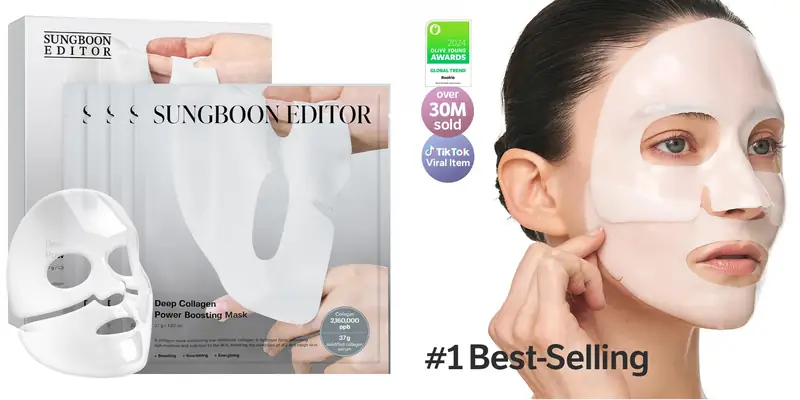
1. SUNGBOON EDITOR Deep Collagen Overnight Mask
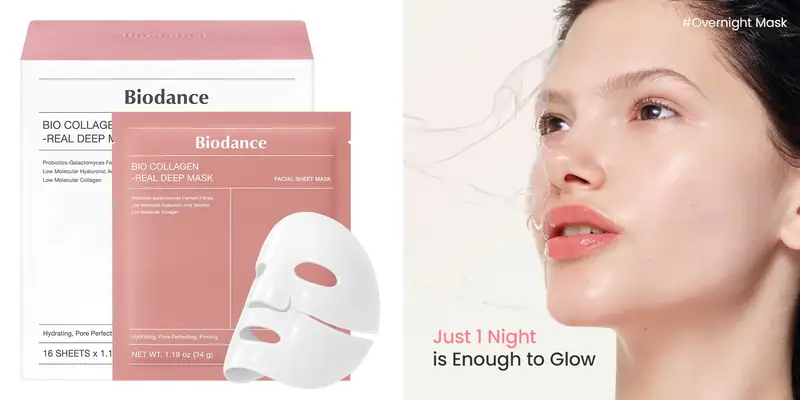
2. BIODANCE Bio-Collagen Real Deep Mask
Tailored Strategies for Every Skin Type
A “one-size-fits-all” approach to skincare usually leads to poor results. To achieve deep hydration, you must adjust your strategy based on your skin’s unique lipid (oil) profile.
Oily Skin: The “Hydration Without Weight” Plan
Oily skin is often dehydrated because the person is using harsh products to “kill the oil.” This causes the skin to produce more oil to compensate for the loss of water.
- Action Plan: Use a “water-layering” strategy. Use a lightweight serum with Niacinamide and Zinc to control oil while providing water. Avoid heavy creams; instead, look for “gel-creams” that are oil-free but rich in Hyaluronic Acid.
Dry Skin: The “Barrier Rebuilding” Plan
Dry skin lacks both oil and water. The “mortar” in the barrier wall is missing, so moisture is constantly leaking out.
- Action Plan: You need a “lipid-rich” routine. Look for products that pair Ceramides with Fatty Acids and Urea. Urea is a natural exfoliant that also acts as a humectant, helping dry, flaky skin absorb water more effectively.
Combination Skin: The “Zone Mapping” Plan
This skin type has a thirsty “T-zone” (forehead and nose) that is oily, but cheeks that are dry and tight.
- Action Plan: Use a lightweight gel on the T-zone and a thicker, ceramide-rich cream on the cheeks. This ensures you are not clogging pores in one area while leaving another area unprotected.
Sensitive Skin: The “Calm and Seal” Plan
Sensitive skin has a “leaky” barrier that lets irritants in easily.
- Action Plan: Focus on fragrance-free products. Pair Panthenol (Vitamin B5) with Squalane. Squalane mimics your skin’s natural oils perfectly, sealing the skin without causing the stinging or burning often felt by sensitive types.
Lifestyle Integration: Hydrating from the Inside Out
Dermatological wellness is holistic. You cannot have glowing skin if your internal systems are running on empty. To maintain a radiant look, you must support your body’s production of Natural Moisturizing Factors (NMFs).
NMFs are tiny molecules like amino acids and urea that live inside your skin cells to hold onto water. They are created when a specific protein called filaggrin breaks down. This biological process only happens correctly if the cellular environment is well-hydrated. This is the scientific reason why drinking water matters—it provides the environment for your skin to “create” its own moisture.
To support your NMFs and internal hydration, follow these 5 habits:
- Hydrate with Intent: Drink at least 8 glasses of water daily to ensure your cells have the volume needed to break down filaggrin into NMFs.
- Eat Your Lipids: Consume healthy fats like salmon, walnuts, or flaxseeds. These provide the building blocks for the “mortar” in your skin barrier.
- The “Golden Hour” of Sleep: Aim for 7-9 hours. Between 11 PM and 2 AM, your skin’s blood flow increases, and barrier repair is at its peak.
- Strategic Humidity: Use a humidifier in your bedroom. This stops the air from “stealing” moisture from your face while you sleep.
- Limit “Moisture Robbers”: Caffeine and alcohol act as diuretics. For every cup of coffee, drink an extra glass of water to maintain balance.
Common Pitfalls: Why Your Hydration Routine Might Fail
Even with the best products, certain “skin-sabotaging” habits can dissolve your progress. Understanding the consequences of these mistakes is key to avoiding them.
- The Hot Water Trap: A steaming hot shower feels good, but it is a disaster for your skin. Hot water acts like a solvent that dissolves your Ceramides. Without these fats, your “skin wall” falls apart, leading to instant dryness. Always use lukewarm water.
- Over-Exfoliation Overload: Scrubbing your skin more than twice a week creates micro-tears in the barrier. This is like poking holes in a water balloon; no amount of moisturizer can fix a barrier that is constantly being ripped open.
- The Missing “Lid”: Using a hydrating serum (humectant) without a moisturizer (occlusive) on top is a major mistake. Without that final layer to “seal” the serum, the water will simply evaporate into the air.
- Ignoring SPF: Sun damage destroys the collagen and elastin fibers that hold water in your skin. A single bad sunburn can leave your skin’s hydration levels damaged for weeks.
Conclusion: The Path to Long-Term Skin Health
Deep Skin Hydration is not a luxury or a temporary trend; it is the fundamental requirement for a healthy body and a radiant appearance. By moving away from “thin” marketing claims and embracing the science of the skin barrier, you can take control of your dermatological health.
Listen to what your skin needs—whether it’s a boost in ceramides, a deeper delivery system like a hydrogel mask, or more consistent internal hydration. Remember that your skin is a reflection of your overall wellness. When you support it with science-backed ingredients, personalized routines, and healthy daily habits, you unlock a resilience and glow that lasts a lifetime.
The future of skincare is personalized, and it begins with the water within.
maintaining a healthy, youthful, and radiant complexion. By understanding the factors that influence hydration, implementing effective skincare practices, and choosing the right products, you can achieve and maintain optimal moisture levels in your skin. Remember, consistency is key. Make hydration a priority in your skincare routine, and your skin will reward you with a glowing, supple, and age-defying appearance.
- Proper Skin Care Routine
https://nuvaglam.org/2023/05/12/proper-skin-care-routine/ - The Hydration Connection: How Water Intake Impacts Skin Health
https://forefrontdermatology.com/the-hydration-connection-how-water-intake-impacts-skin-health/ - How to Hydrate Skin from the Inside: Daily Guide and Quick Tips
https://www.healthline.com/health/beauty-skin-care/better-skin-in-3-days - How to Keep Your Skin Hydrated (and Why It’s Important)
https://www.verywellhealth.com/how-to-hydrate-skin-5105285 - Dos and Don’ts of Skin Hydration
https://www.webmd.com/beauty/features/skin-hydration

Meet Donna: Founder & Lead Curator
Hi, I’m Donna, the voice and vision behind Aesthetic Thrive.
As a professional digital content creator and wellness strategist, I founded this platform to simplify the journey toward a more beautiful, balanced life. My background is rooted in a deep passion for fashion, intentional living, and holistic health. For years, I have dedicated my career to researching how the environments we build both within our bodies and in our homes directly affect our daily confidence and long-term well-being. Read More!
Trust in your purchase:
Every product featured on our site has been carefully researched and selected based on quality, customer ratings, and positive reviews to ensure you receive excellent value for your money.
Please note:
This post contains affiliate links. If you make a purchase through these links, we may earn a small commission at no additional cost to you. This helps support our site and allows us to continue bringing you valuable content. Thank you!
Thank you for your precious time spent with AestheticThrive.